
Differences Between Valve Seal Materials and How to Choose the Right One
Valve seal materials directly affect leak resistance, temperature performance, chemical compatibility, service life, and overall valve reliability. Understanding the differences between common sealing materials helps you choose the right valve for your working conditions.
Why Valve Seal Material Matters
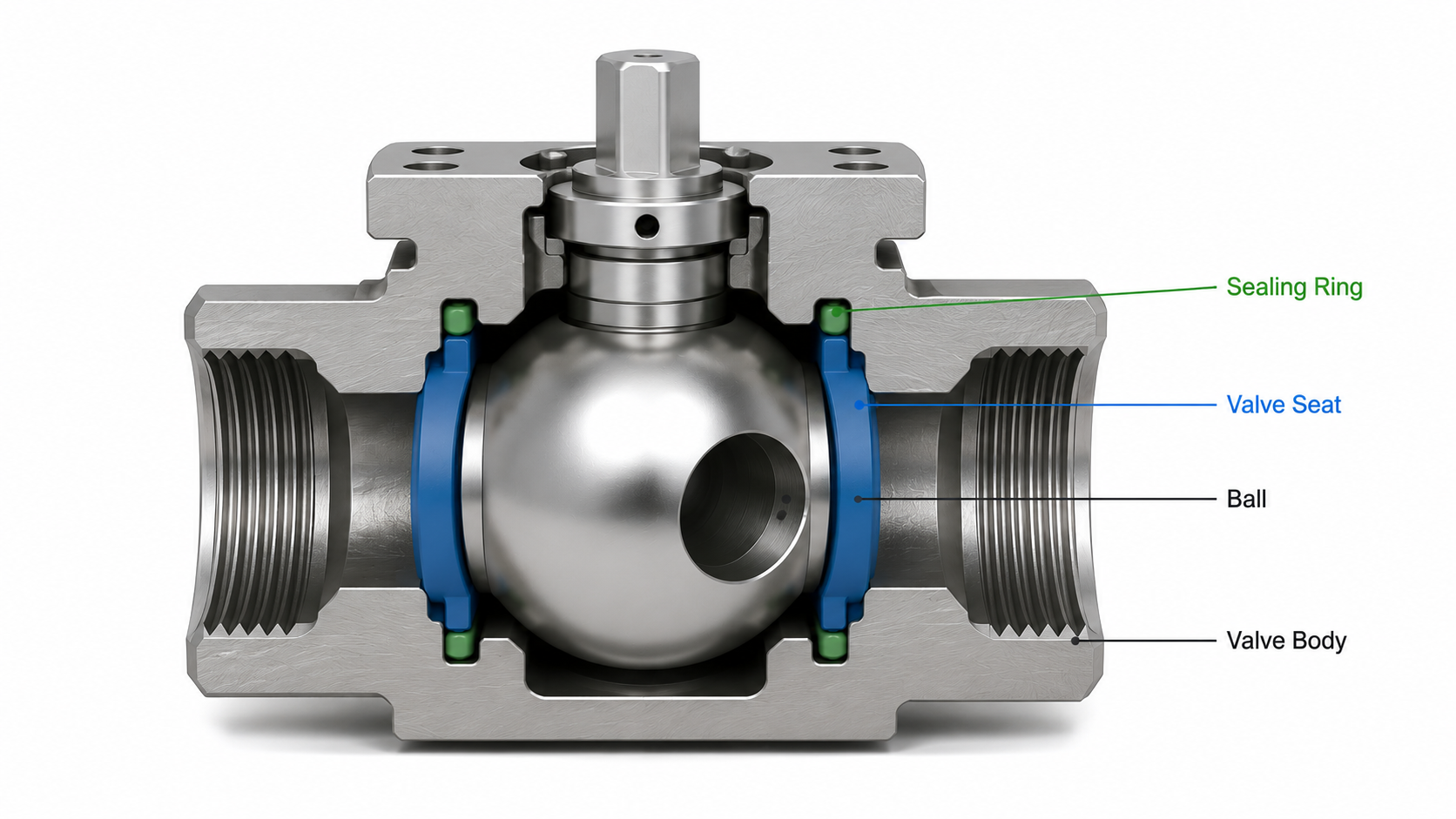
The valve body provides structural strength and protects the internal components, while the sealing system keeps the valve closed and prevents fluid leakage. Even when two valves have the same body material, connection size, and pressure rating, different seal materials can result in significantly different performance and service life.
A seal that performs well with water may not be suitable for fuel or mineral oil. Likewise, a seal designed for room-temperature service may not withstand hot water, steam, or high-temperature industrial fluids. The working medium, temperature, pressure, chemical exposure, and operating frequency should all be considered before selection.
Valve Seat
The valve seat is positioned between the ball or plug and the valve body. It provides the primary sealing surface when the valve is closed. PTFE is one of the most common valve seat materials.
O-Ring or Sealing Ring
O-rings are commonly used around the valve stem, body connections, actuator connections, and other static or dynamic sealing points. Common materials include EPDM, FKM, NBR, and silicone.
Common Valve Seal Materials Compared
| Material | Main Advantages | Typical Applications | Performance Characteristics | Important Limitations |
|---|---|---|---|---|
| PTFE | Low friction, excellent chemical resistance, low water absorption, and good dimensional stability. | Water, air, gases, many chemicals, laboratory fluids, and general industrial valve service. | Commonly used as a valve seat because it provides smooth operation and reliable chemical resistance. | May experience cold flow or deformation under continuous high pressure or prolonged high-temperature loading. It also has less elasticity than rubber seals. |
| EPDM | Good resistance to hot water, steam, ozone, weathering, and many water-based fluids. | Water systems, HVAC systems, heating systems, cooling water, and outdoor equipment. | Good elasticity and weather resistance make it suitable for many water-based and outdoor applications. | Generally unsuitable for petroleum-based oils, mineral oils, fuels, and many hydrocarbon fluids. |
|
FKM Commonly known as Viton |
Strong resistance to oils, fuels, many chemicals, and elevated temperatures. | Fuel systems, mineral oils, lubricating oils, automotive equipment, and industrial machinery. | Often selected for demanding oil, fuel, and high-temperature applications. | May not be suitable for hot water, steam, and certain polar fluids. Compatibility must be confirmed for the specific medium. |
| NBR | Good resistance to mineral oils, grease, and many petroleum-based fluids at a cost-effective price. | Oil lines, fuel systems, hydraulic equipment, pneumatic systems, and general machinery. | Offers good wear resistance and is suitable for many standard-temperature oil applications. | Usually has lower resistance to ozone, ultraviolet exposure, weathering, and high temperatures than EPDM or FKM. |
| Silicone | Soft, flexible, and capable of maintaining elasticity over a relatively wide temperature range. | Low-pressure equipment, laboratory devices, temperature-sensitive applications, and selected food-related equipment. | Useful when soft sealing and temperature flexibility are important. | Generally not the first choice for high-pressure, abrasive, fuel, or heavy-duty dynamic applications. |
Broad chemical resistance
Weather resistance
High-temperature service
Cost-effective sealing
Wide temperature range
Key Differences Between Seal Materials
- Water Resistance EPDM is commonly used for water, hot water, and water-based systems. PTFE may also be suitable when low friction and chemical resistance are required.
- Oil and Fuel Resistance NBR and FKM are commonly considered for oil and fuel applications. FKM is generally preferred for higher temperatures or more demanding conditions.
- Chemical Resistance PTFE is often selected for broad chemical resistance, but compatibility still depends on the exact chemical, concentration, temperature, and exposure time.
- High-Temperature Performance FKM and PTFE are often used in higher-temperature environments, but the final temperature rating depends on the complete valve design.
- Outdoor Durability EPDM generally offers good resistance to ozone, ultraviolet exposure, and weathering, making it useful for selected outdoor systems.
- Elasticity and Recovery EPDM, FKM, and NBR are elastomers that provide flexible O-ring sealing. PTFE has lower elasticity and is more commonly used for valve seats.
How to Choose the Right Seal Material
Identify the Working Medium
Determine whether the valve will handle water, air, gas, fuel, mineral oil, chemical liquids, cleaning solutions, steam, or another fluid. This is the first and most important step in material selection.
Confirm the Temperature Range
Check the minimum and maximum operating temperatures, including startup, shutdown, cleaning, steam exposure, and ambient conditions. The seal must remain stable and flexible throughout the entire temperature range.
Check Pressure and Cycling Frequency
High pressure, frequent opening and closing, vibration, pressure spikes, and continuous operation can accelerate seal wear. Confirm the pressure capability of both the valve seat and the O-rings.
Review Chemical Compatibility
Chemical compatibility depends on the exact fluid, concentration, temperature, and contact duration. Do not assume that a material suitable for water will also work with oil, fuel, solvents, or cleaning chemicals.
Confirm Certification Requirements
For drinking water, food, medical, or other regulated applications, verify whether the complete valve assembly has the required certification. The valve body or seal material alone does not automatically prove compliance.
Recommended Materials for Common Applications
Water and HVAC Systems
EPDM or PTFE may be considered. EPDM is commonly used for water-system O-rings, while PTFE is often used for valve seats requiring low friction and chemical stability.
Oil and Fuel Systems
NBR and FKM are common options. NBR may suit standard-temperature oil service, while FKM is often considered for higher temperatures and more demanding fluids.
Chemical Processing
PTFE is often considered because of its chemical resistance. Always verify compatibility with the specific chemical and operating conditions.
Outdoor Piping
EPDM may be suitable when the seal must withstand ozone, ultraviolet exposure, and changing weather conditions.
High-Temperature Equipment
FKM or PTFE may be evaluated, but temperature, pressure, cycling frequency, and seal position must all be considered together.
Laboratory Equipment
PTFE is often considered for applications requiring low friction, low water absorption, and chemical stability.
Valve Seal Selection Checklist
- Confirm the valve body, ball, plug, or stem material.
- Confirm the valve seat material, such as PTFE.
- Confirm the O-ring or sealing ring material, such as EPDM, FKM, or NBR.
- Identify the actual working medium and its concentration.
- Confirm the minimum and maximum operating temperature.
- Confirm the normal pressure, maximum pressure, and pressure fluctuations.
- Consider the opening and closing frequency and expected service life.
- Confirm the connection size, thread standard, flow direction, and installation position.
- For regulated applications, verify the certification of the complete valve assembly.
Conclusion
No single seal material is suitable for every valve and every fluid. PTFE is commonly selected for low friction and chemical resistance. EPDM is often used for water-based systems and outdoor environments. FKM is commonly considered for oils, fuels, chemicals, and higher temperatures. NBR is suitable for many standard-temperature oil and machinery applications, while silicone is useful when soft sealing and temperature flexibility are required. The final selection should always consider the valve seat, O-ring, working medium, temperature, pressure, cycling frequency, and certification requirements together.