
Shallow Well Jet Pumps: Flow and Pressure Explained
A shallow well can supply water for everyday household use, outdoor faucets, and suitable irrigation applications. Bringing that water into a working supply system requires a pump matched to both the water source and the way water will be used.
A shallow well jet pump is designed for this role. Installed above ground, it draws water from a nearby source and supplies a pressurized system, often working together with a pressure tank and an automatic pressure switch.
How Flow and Pressure Work Together
Think about a shower running while another faucet is opened. The system needs enough water volume to serve both outlets, along with sufficient pressure to move water through the piping.
Flow, usually measured in gallons per minute (GPM), describes the volume of water delivered. Pressure, measured in pounds per square inch (PSI), is another part of the same operating condition.
For pump selection, these two values belong together. The useful question is how much water the pump can supply at the pressure required by the system.
The answer depends on the pump’s performance, the water level, and the resistance of the installed piping.
The Role of a Pressure Tank and Switch
In a typical automatic shallow-well system, the pump supplies water to a pressure tank. The tank stores pressurized water and helps reduce frequent pump starts.
As water is used, system pressure falls. The pressure switch starts the pump at its cut-in setting and stops it when pressure reaches the cut-out setting.
A 30/50 PSI switch, for example, starts the pump at approximately 30 PSI and stops it at approximately 50 PSI. Pressure varies during this cycle; the switch does not maintain one constant pressure.
The pump, tank, and controls should be selected to work together around the household’s water demand.
Reading Flow at Your Water Level
Once you know your system’s water demand, a pump’s performance table helps you connect that demand to your installation.
For example, a rating of 22.5 GPM at 40 PSI with a 10-foot suction lift describes three conditions together: the volume delivered, the discharge pressure, and the vertical distance from the pump to the water surface.
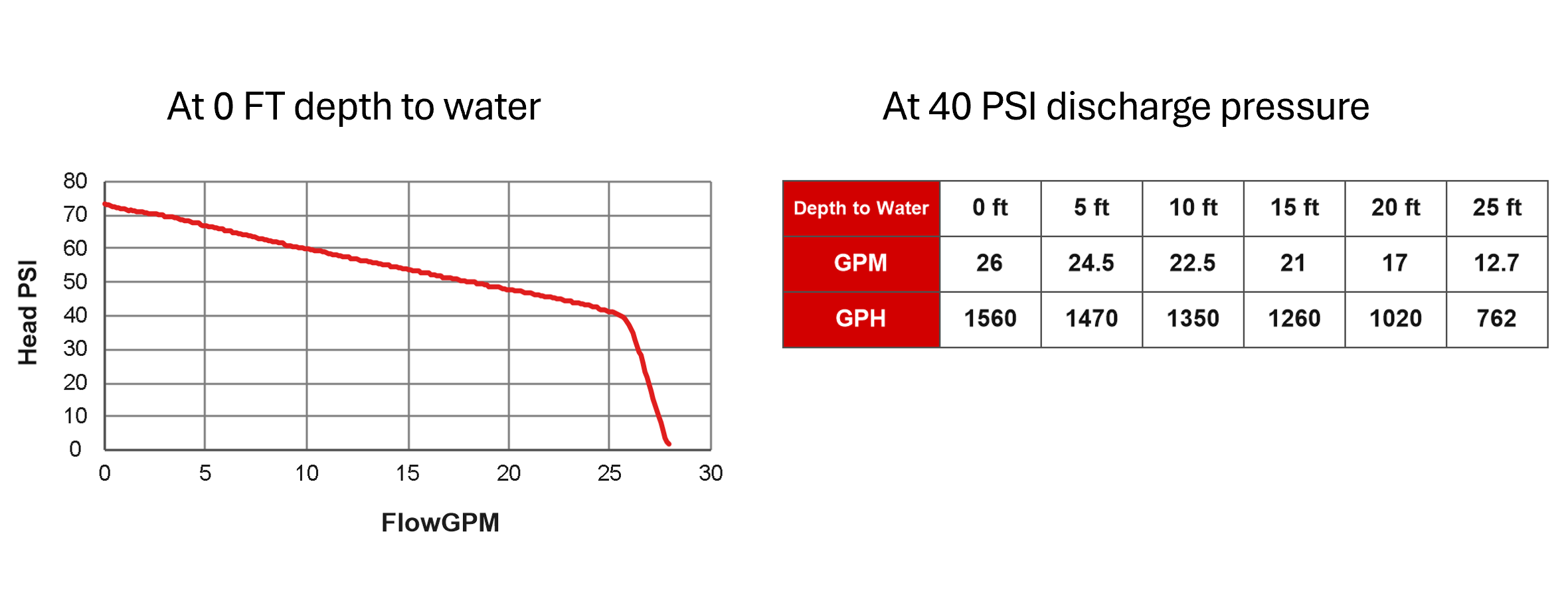
If your water level is farther below the pump, use the corresponding suction-lift figure in the product page. Water levels can also fall during pumping, so the operating water level is useful when selecting a shallow well jet pump.
Pressure at the pump outlet must also account for the piping leading to the outlets. Pipe length, fittings, and elevation changes affect the pressure available where water is used.
Water then travels from the pump through the piping to the outlets in the home. Pipe length, fittings, and elevation changes affect the pressure available at a shower, faucet, or outdoor hose. The pump’s performance data describes the starting point; the water source and connected piping help determine how that performance translates into everyday water supply.
From the Well to the Home
The diagram below shows how these parts connect. Water is drawn from the well into the jet pump, then enters the supply piping leading to the home. The pressure tank connects to a branch of this line, where it receives and stores pressurized water.
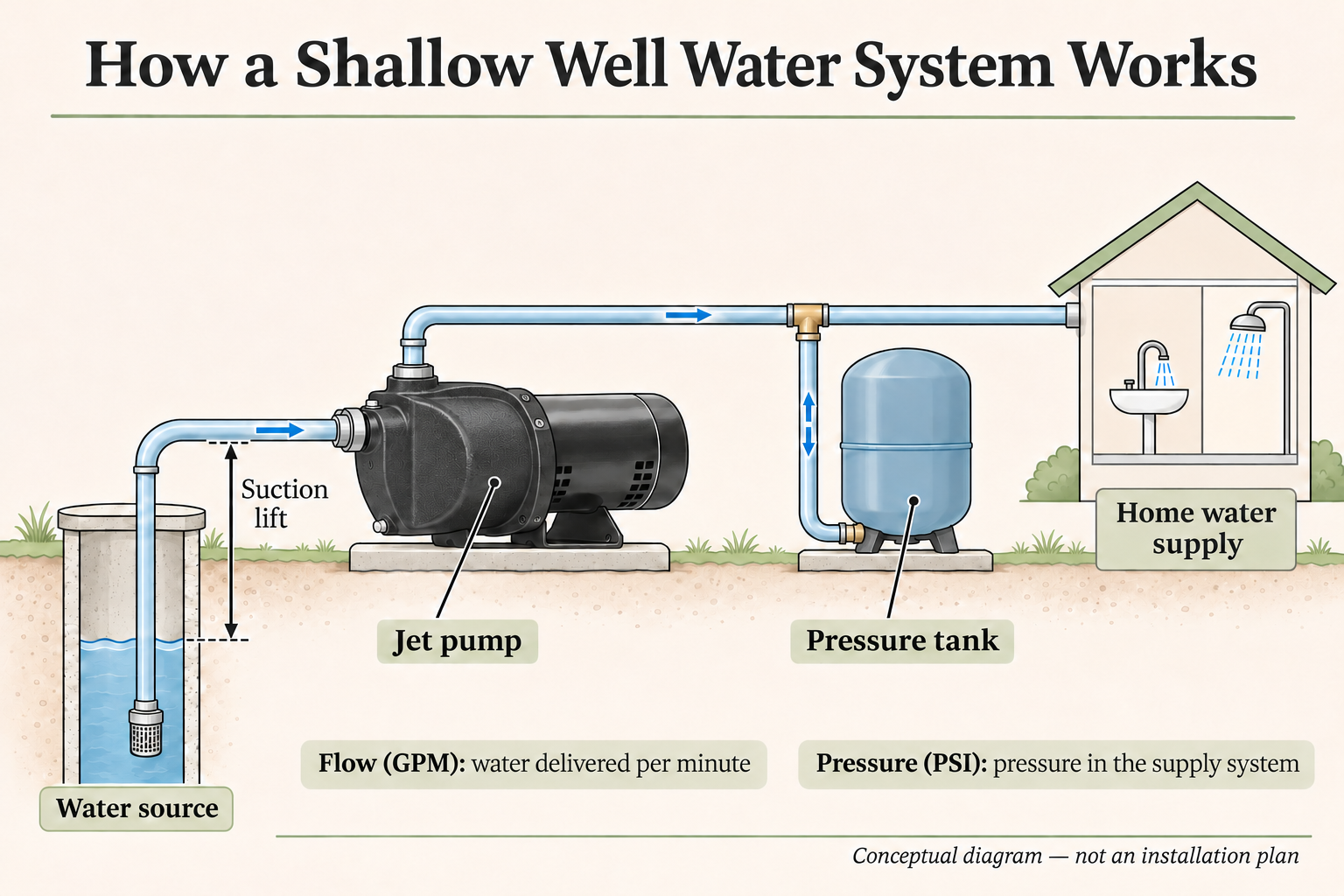
When an outlet opens, stored water from the tank enters the supply line. As pressure falls to the switch’s cut-in setting, the pump starts to replenish the supply. This interaction connects the flow and pressure figures in a performance table with the familiar experience of using a shower, opening a faucet, or watering the garden.
Explore the U.S. Solid Shallow Well Jet Pump
The U.S. Solid 1 HP Shallow Well Jet Pump is designed for pressurized home water supply, delivering 22.5 GPM at 40 PSI with a 10-foot suction lift. Its cast iron construction, factory-installed 30/50 PSI pressure switch, and 115/230 V capability support a range of shallow-well installations. Explore the product page for detailed specifications and performance data to help match the pump to your water system.