
5 Maintenance Tips to Extend Solenoid Valve Lifespan
Solenoid valves are critical components in industrial automation systems. Proper maintenance not only extends their service life but also ensures stable system operation and reduces failure rates. This comprehensive guide shares 5 practical maintenance tips to help you maximize your equipment investment and minimize downtime.
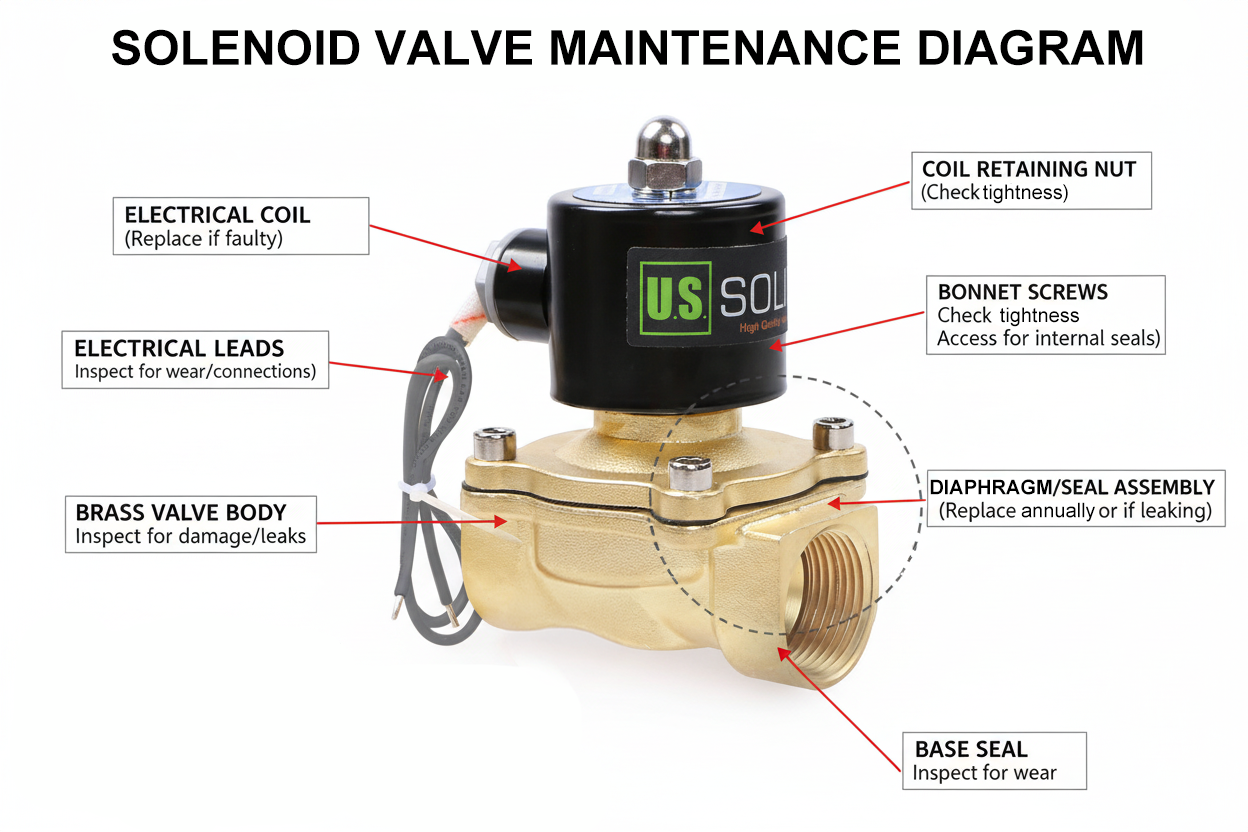
1. Regularly Clean Filters to Prevent Debris Blockage
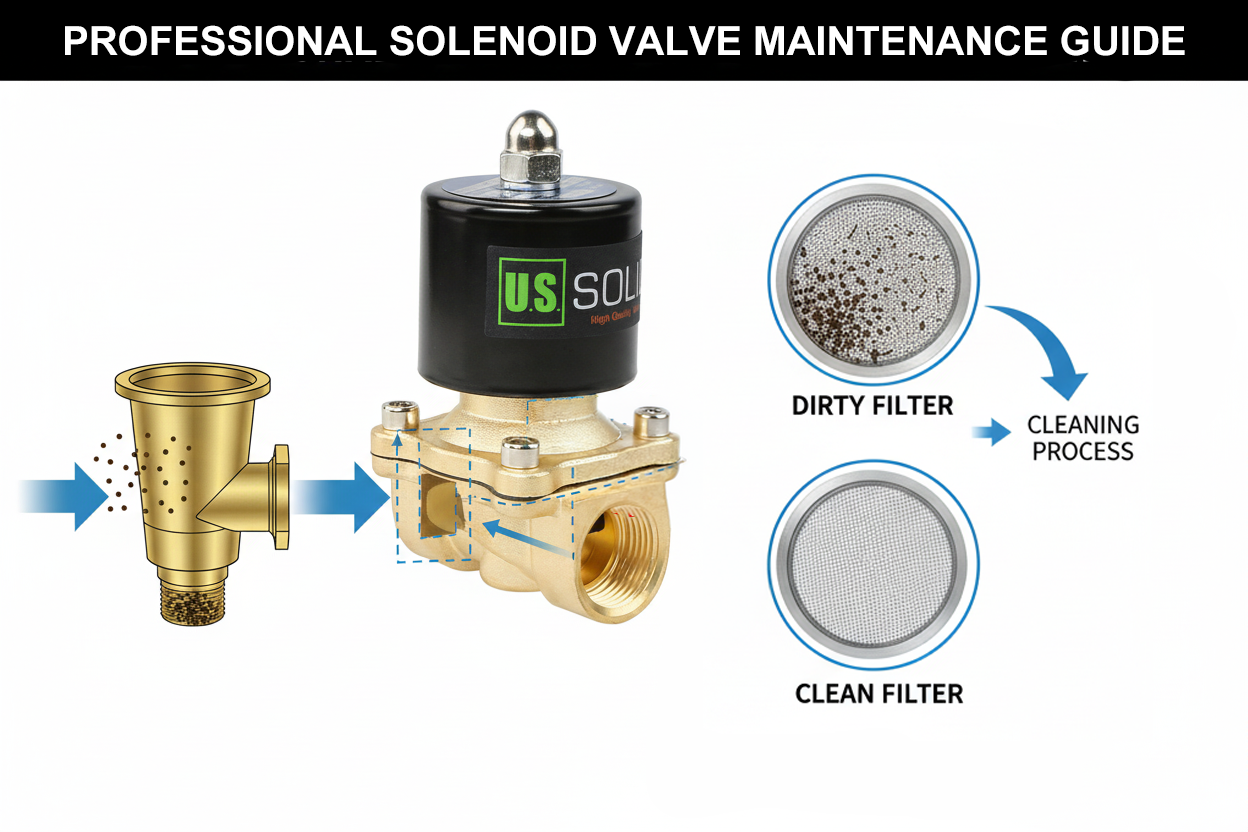
Why It Matters:
Debris, rust, and welding slag are the primary causes of solenoid valve failures. These contaminants can jam the plunger (armature), damage seals, and cause the valve to malfunction or leak.
- Install a Y-type strainer or basket filter at the solenoid valve inlet
- Inspect and clean filter screens monthly in normal conditions
- Always verify flow direction markings when installing or replacing filters
- Keep spare filter screens in stock for quick replacement
2. Inspect Electrical Connections and Ensure Voltage Stability
Why It Matters:
Voltage fluctuations, loose connections, or coil overheating can lead to coil burnout, requiring complete valve replacement or costly repairs.
- Perform quarterly inspections of all wire terminals for looseness or oxidation
- Use a multimeter to measure actual operating voltage (±10% of rated)
- Ensure junction boxes are sealed against moisture for outdoor installations
- Avoid rapid cycling to reduce thermal stress on coils
3. Replace Seals Regularly to Prevent Leakage
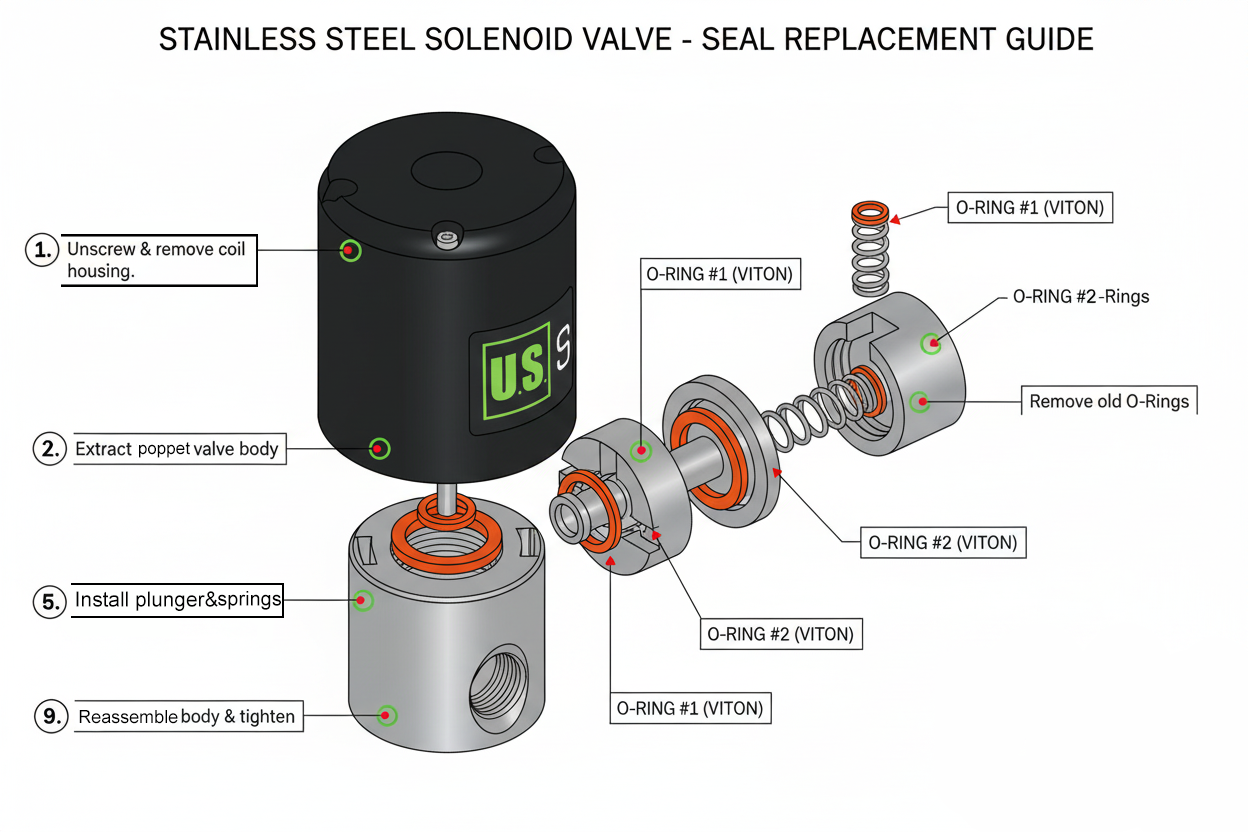
Why It Matters:
Sealing components (O-rings, diaphragms) naturally degrade over time. Worn seals lead to internal or external leakage, reducing system efficiency.
- Viton (FKM) seals: Replace every 2-3 years for oils and chemicals
- NBR (Nitrile) seals: Replace every 1-2 years for water and air
- Apply compatible lubricant (e.g., silicone grease) during installation; avoid petroleum-based lubricants for EPDM seals
- Inspect sealing surfaces for scratches or corrosion before reassembly
4. Ensure Correct Installation Direction and Working Pressure
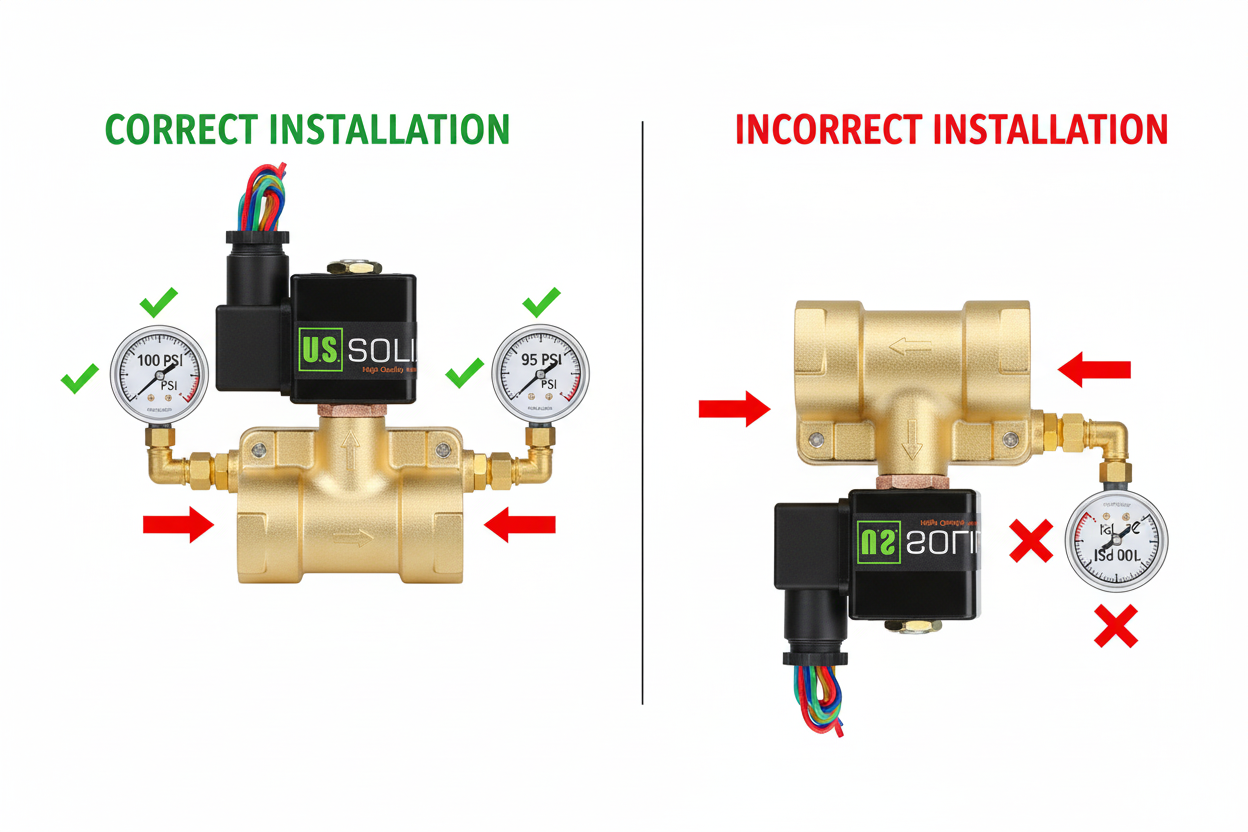
Why It Matters:
Improper installation is a leading cause of failure. Incorrect flow direction prevents proper operation, and overpressure can damage internal components.
- Always follow the flow direction arrow marked on the valve body
- Verify valve type: Ensure "Pilot Operated" valves meet the minimum differential pressure, while "Direct Acting" valves are used for low-pressure systems
- Install pressure gauges at strategic points to monitor operating conditions
- For vertical installations, position the coil upward to prevent sediment accumulation in the plunger tube
5. Establish Comprehensive Maintenance Records
Why It Matters:
Systematic record-keeping enables predictive maintenance and identifies recurring problems, preventing unexpected failures.
- Create a detailed valve inventory including model, serial number, and installation date
- Document every maintenance activity, repairs, and parts replaced
- Develop preventive schedules: Annual for light duty, quarterly for heavy duty
- Maintain adequate stock of critical spare parts (seal kits, coils)