


Εισαγωγή
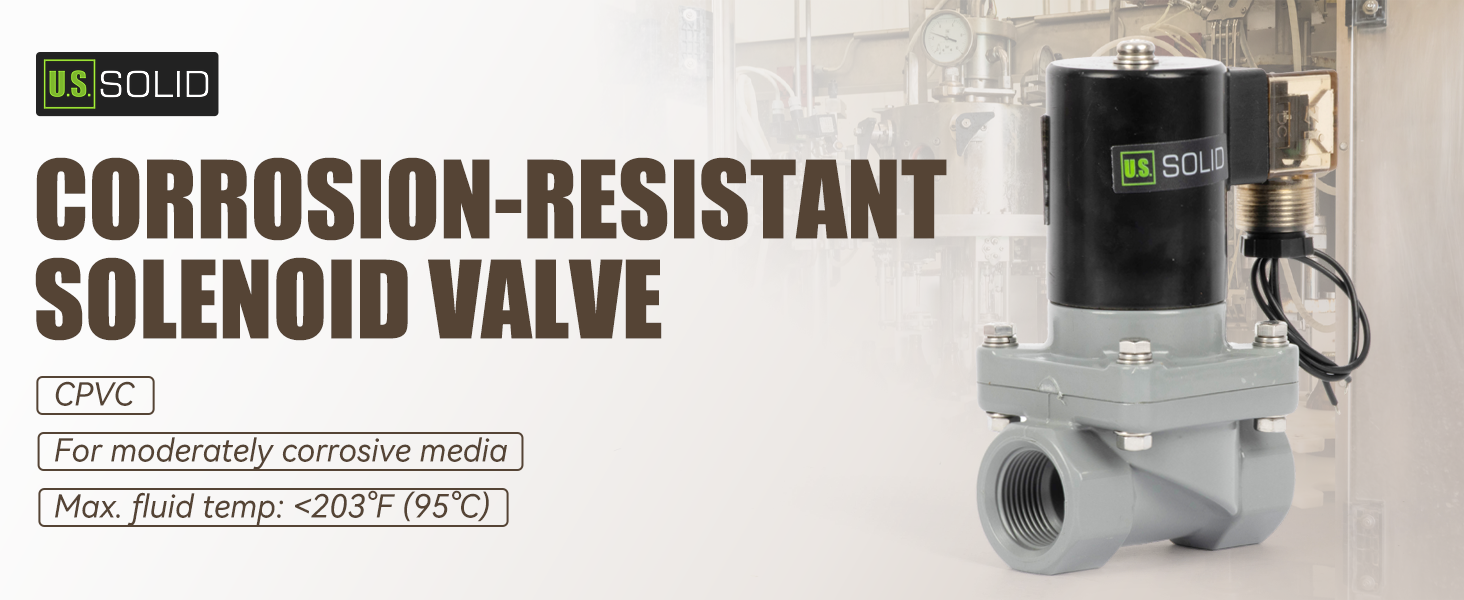
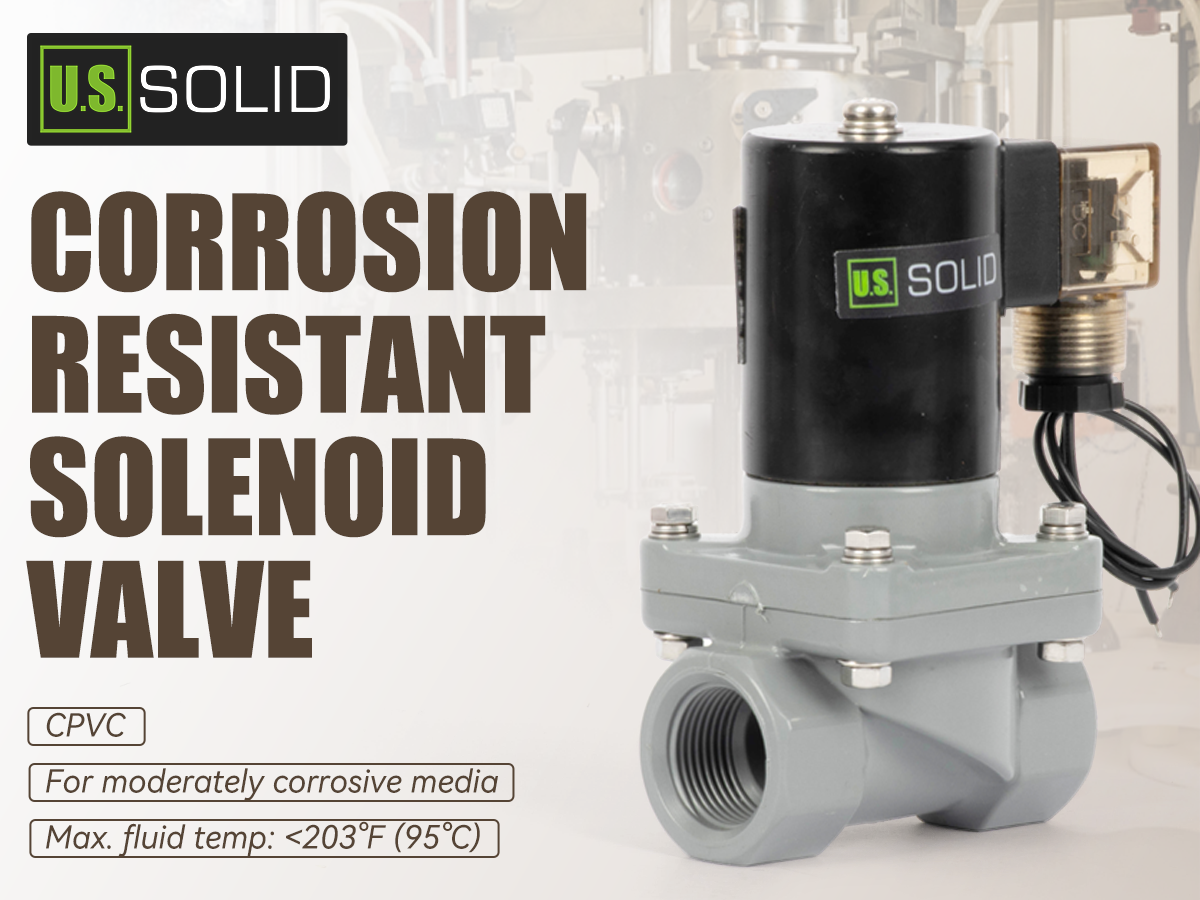
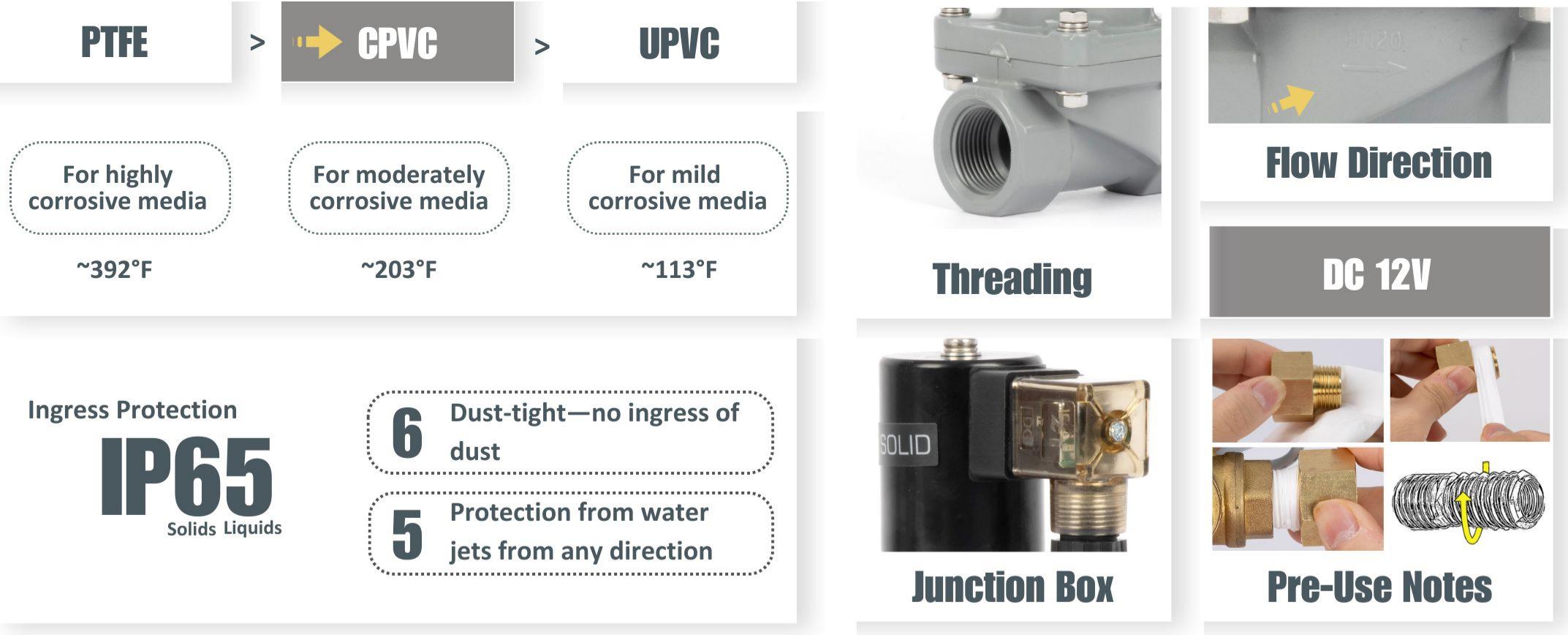
Αυτή η σειρά ηλεκτρομαγνητικών βαλβίδων ανθεκτικών στη διάβρωση είναι κατάλληλη για τον χειρισμό διαβρωτικών υγρών όπως οξέα, αλκάλια (βάσεις) και άλατα, και είναι συμβατή με θειικό οξύ σε συγκέντρωση έως 60% και υδροχλωρικό οξύ σε όλες τις συγκεντρώσεις. Το υλικό του σώματος της βαλβίδας είναι CPVC και το υλικό στεγανοποίησης είναι VITON, με μέγιστη θερμοκρασία υγρού 203℉.
Εφαρμογές
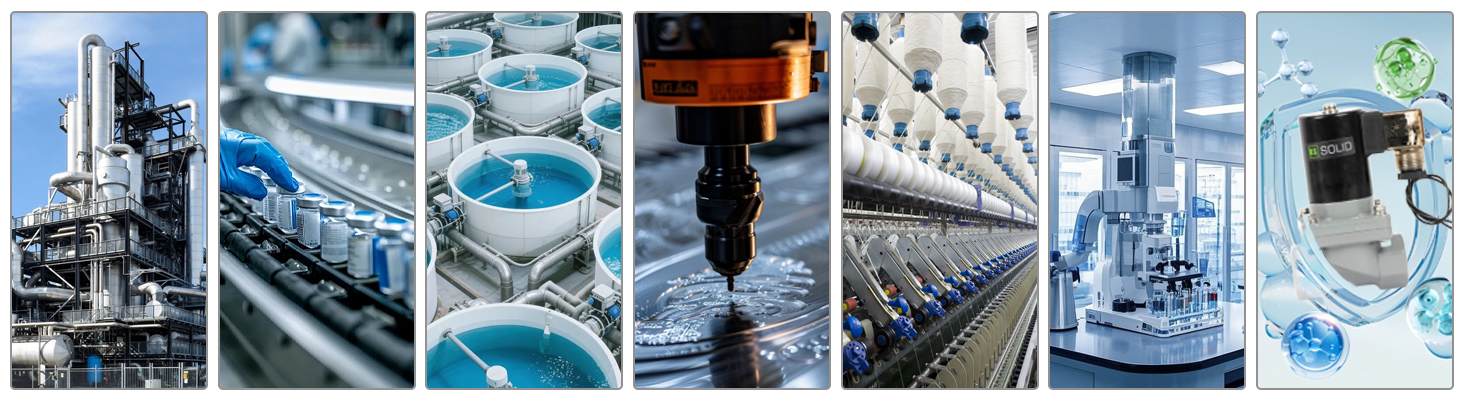
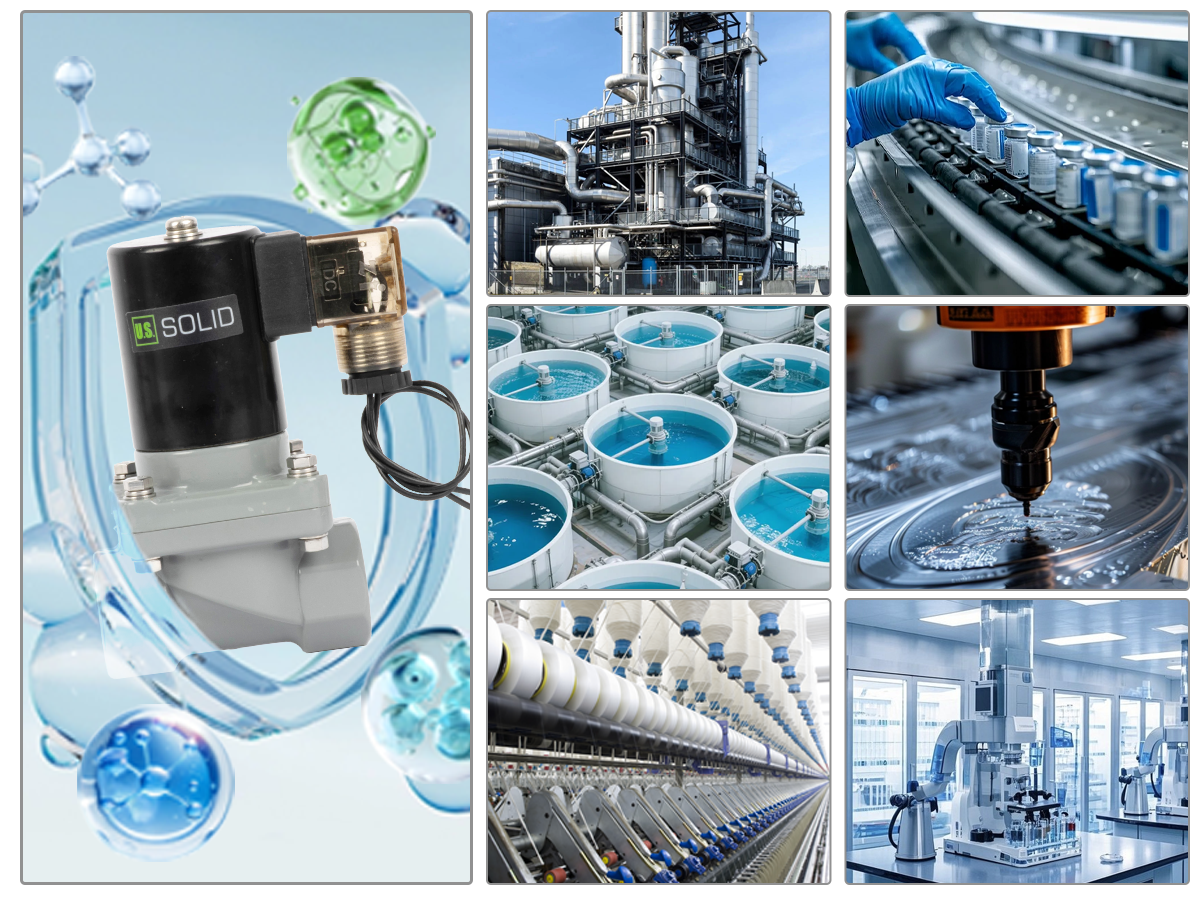
Αυτή η βαλβίδα έχει σχεδιαστεί κυρίως για κατασκευαστές και εγκαταστάσεις στις βιομηχανίες χημικών, φαρμακευτικών, επεξεργασίας νερού, ηλεκτρολυτικής επιμετάλλωσης, κλωστοϋφαντουργικών και εργαστηριακών αναλύσεων, όπου εμπλέκονται μέτρια διαβρωτικά μέσα.
Χαρακτηριστικά
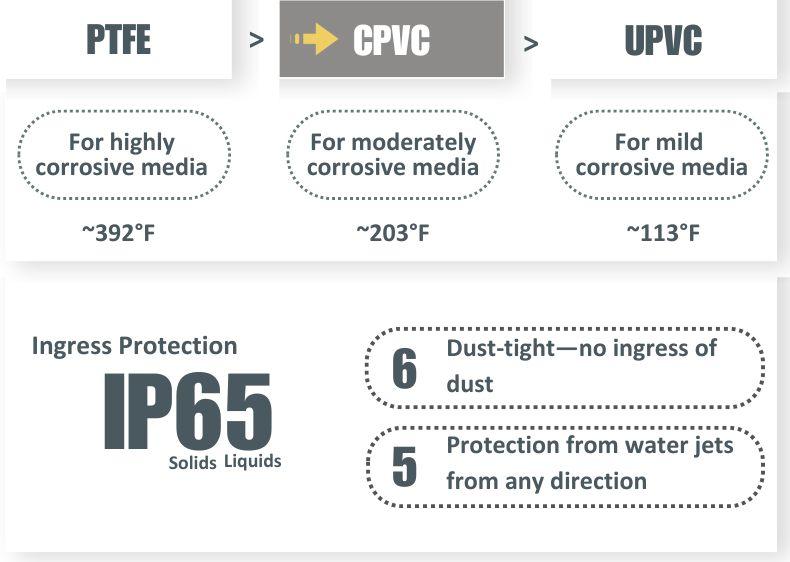
- Για μέτρια διαβρωτικά μέσα: Κατάλληλο για το χειρισμό διαβρωτικών υγρών όπως οξέα, αλκάλια και άλατα, με μέγιστη θερμοκρασία υγρού 203℉(95°C). Χρησιμοποιείται ευρέως στην χημική επεξεργασία, την φαρμακευτική παραγωγή, την επεξεργασία νερού, την ηλεκτρολυτική επιμετάλλωση, την κατασκευή υφασμάτων, την εργαστηριακή ανάλυση και άλλες βιομηχανικές εφαρμογές.
- Μόνωση τύπου εμβόλου: Ο θάλαμος μέσου είναι πλήρως διαχωρισμένος από τα ηλεκτρομαγνητικά εξαρτήματα, αποτρέποντας τη διαρροή διαβρωτικού μέσου από το να προκαλέσει ζημιά στο πηνίο και ενισχύοντας την αντιδιαβρωτική αντοχή.
- Υλικό σώματος βαλβίδας: Κατασκευασμένο από CPVC, το οποίο προσφέρει υψηλότερη αντοχή στη θερμοκρασία και ισχυρότερη αντοχή στη διάβρωση από οξύ και αλκάλια υψηλής συγκέντρωσης σε σύγκριση με το UPVC. Είναι κατάλληλο για θειικό οξύ με συγκέντρωση <60% και υδροχλωρικό οξύ σε οποιαδήποτε συγκέντρωση.
- Σφραγίδα Viton: Διαθέτοντας ανθεκτική σφραγίδα Viton, αυτή η βαλβίδα μπορεί να αντέξει υψηλές θερμοκρασίες και να αντισταθεί σε διαβρωτικές χημικές ουσίες και υγρά όπως βενζίνη, λάδια, ντίζελ και λιπαντικά.
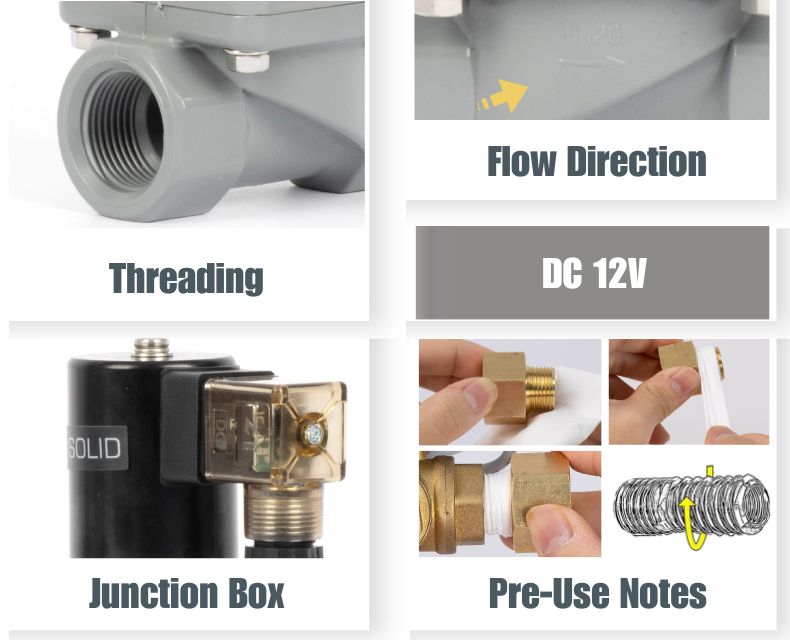
- NPT/G: NPT (Εθνική Κωνικότητα Σωλήνων) και σπειρώματα G (BSPP) για την κάλυψη ποικίλων παγκόσμιων προδιαγραφών, εξασφαλίζοντας ασφαλή σφράγιση με teflon tape.
- Κουτί σύνδεσης: Παρέχει ασφαλή προστασία καλωδίωσης για σκληρά περιβάλλοντα (σκόνη, υγρασία, κραδασμούς).
Εγχειρίδιο Χρήστη
Για να μάθετε πώς να χρησιμοποιείτε αυτό το προϊόν, ανατρέξτε στο user manual.
Τεχνικά Δεδομένα
| Μοντέλο | USS-HSV04001 | Μέγεθος θύρας | 1/2" | ||
| Τύπος νήματος | NPT/G | Υλικό σώματος | CPVC | ||
| Τύπος Λειτουργίας | Άμεσης δράσης | Τύπος καλωδίωσης | Κουτί διακλάδωσης | ||
| Λειτουργία λειτουργίας | Κανονικά Κλειστά | Διάφραγμα ροής | 15 χιλιοστά | ||
| Τιμή Ροής | 4,5 CV | Σφραγίδα | ΒΙΤΟΝ | ||
| Ώρα λειτουργίας | ≤1s | Ονομαστική τάση | Συνεχές ρεύμα 12V | ||
| Βαθμολογία IP | IP65 | Εξουσία | 16W | ||
| Μέτρια Θερμοκρασία | 32℉-203℉(0℃-95℃) | Μέγιστη θερμοκρασία περιβάλλοντος | 131℉(55℃) | ||
| Πίεση λειτουργίας | 0,1-6 bar (1,45-87 PSI) | Κατάλληλα μέσα | Μέτρια διαβρωτικά μέσα | ||
| Μικτό βάρος | 1,92 λίβρες | Διαστάσεις συσκευασίας | 4,25"x3,62"x5,43" | ||
Συχνές Ερωτήσεις
Πρόβλημα 1: Ποια είναι τα πλεονεκτήματα των βαλβίδων CPVC και οι συνθήκες εφαρμογής τους;
Οι βαλβίδες CPVC είναι ανθεκτικές σε μέτρια διαβρωτικά μέσα, δεν σκουριάζουν, δεν σχηματίζουν άλατα και διαθέτουν εξαιρετική χημική σταθερότητα, με μέγιστη θερμοκρασία εφαρμογής 95°C. Είναι κατάλληλες για τις περισσότερες συνθήκες εργασίας που περιλαμβάνουν οξέα, αλκάλια, άλατα, χλωριωμένο νερό, βιομηχανικά λύματα κ.λπ. Για συνθήκες εργασίας υψηλής διαβρωτικότητας και υψηλής θερμοκρασίας, οι βαλβίδες PTFE είναι καλύτερη επιλογή, καθώς το PTFE είναι σχεδόν ανθεκτικό σε όλα τα χημικά αντιδραστήρια. Αντιθέτως:
- Οορείχαλκος έχει χαμηλή αντοχή στη διάβρωση και είναι επιρρεπής σε διάβρωση και αποψευδαργύρωση σε όξινα περιβάλλοντα, περιβάλλοντα αμμωνίας, θαλασσινού νερού και θειούχων.
- Οανοξείδωτος χάλυβας προσφέρει καλή συνολική αντοχή στη διάβρωση, ωστόσο είναι επιρρεπής σε διάβρωση με οπές σε περιβάλλοντα υψηλής περιεκτικότητας σε χλωρίδια και θείο και επιρρεπής σε απολέπιση. Επιπλέον, η αντοχή του στη διάβρωση είναι περιορισμένη όταν εκτίθεται σε ισχυρά αναγωγικά οξέα (π.χ. υδροχλωρικό οξύ, αραιό θειικό οξύ).
Πρόβλημα 2: Μπορούν αυτές οι ηλεκτρομαγνητικές βαλβίδες να χρησιμοποιούνται συνεχώς για παρατεταμένες περιόδους;
Αυτές οι βαλβίδες πρέπει να ενεργοποιούνται για λιγότερο από 8 ώρες. Ενώ οι περισσότερες δεν υπερβαίνουν τα 18W ισχύος, τα πηνία βρίσκονται σε περιορισμένο χώρο και μπορούν να καούν εάν ενεργοποιηθούν για πολύ μεγάλο χρονικό διάστημα. Συνιστούμε τη χρήση ανεμιστήρα υπολογιστή για να διατηρείτε το πηνίο δροσερό εάν είναι απαραίτητη η συνεχής λειτουργία.
Πρόβλημα 3: Πόσο διαρκεί μια ηλεκτρομαγνητική βαλβίδα;
Με διάρκεια ζωής άνω του ενός εκατομμυρίου κύκλων, όταν συντηρείται σωστά, η πραγματική μακροζωία μπορεί να διαφέρει ανάλογα με παράγοντες όπως οι συνθήκες λειτουργίας, ο τύπος υγρού, η πίεση, η θερμοκρασία και οι πρακτικές συντήρησης.
Πρόβλημα 4: Μπορεί να χρησιμοποιηθεί για πόσιμο νερό;
Όχι. Αυτή η βαλβίδα χρησιμοποιείται συνήθως για βιομηχανικές εφαρμογές και δεν συνιστάται για χρήση σε πόσιμο νερό.
Πρόβλημα 5: Μπορεί να χρησιμοποιηθεί σε εξωτερικούς χώρους;
Ενώ οι ηλεκτρομαγνητικές βαλβίδες έχουν βαθμολογία IP65, καθιστώντας τες ανθεκτικές στο ψέκασμα νερού, συνιστάται να περικλείετε τη βαλβίδα σε προστατευτικό περίβλημα εάν εγκατασταθεί μόνιμα σε εξωτερικό χώρο για να εξασφαλιστεί μακροχρόνια ανθεκτικότητα.
Πρόβλημα 6: Τι υποδεικνύει το βέλος στο σώμα της βαλβίδας;
Το βέλος στη βαλβίδα υποδεικνύει την κατεύθυνση ροής. Οι περισσότερες βαλβίδες U.S. Solid είναι μονοκατευθυντικές, που σημαίνει ότι έχουν σχεδιαστεί για να λειτουργούν σωστά μόνο όταν το υγρό ρέει προς την κατεύθυνση του βέλους. Εάν εγκατασταθεί στην αντίθετη κατεύθυνση, η βαλβίδα ενδέχεται να μην λειτουργεί σωστά (π.χ., μια κανονικά κλειστή βαλβίδα ενδέχεται να μην κλείσει).
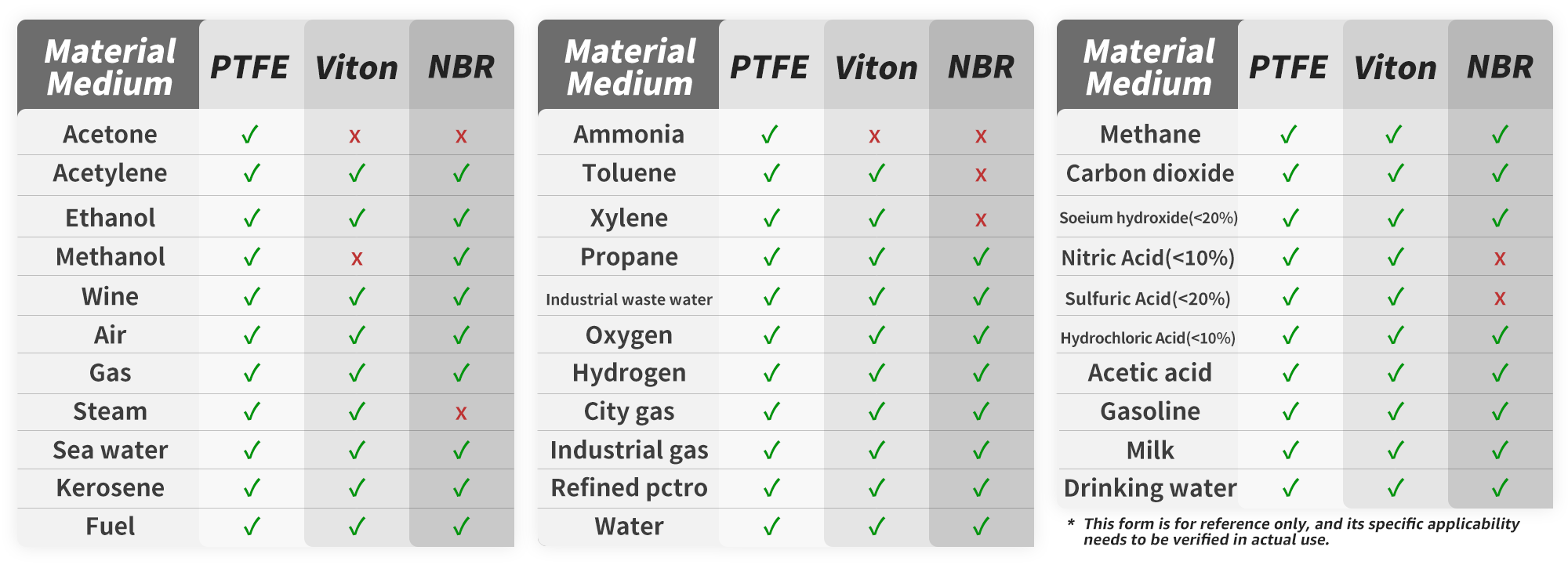
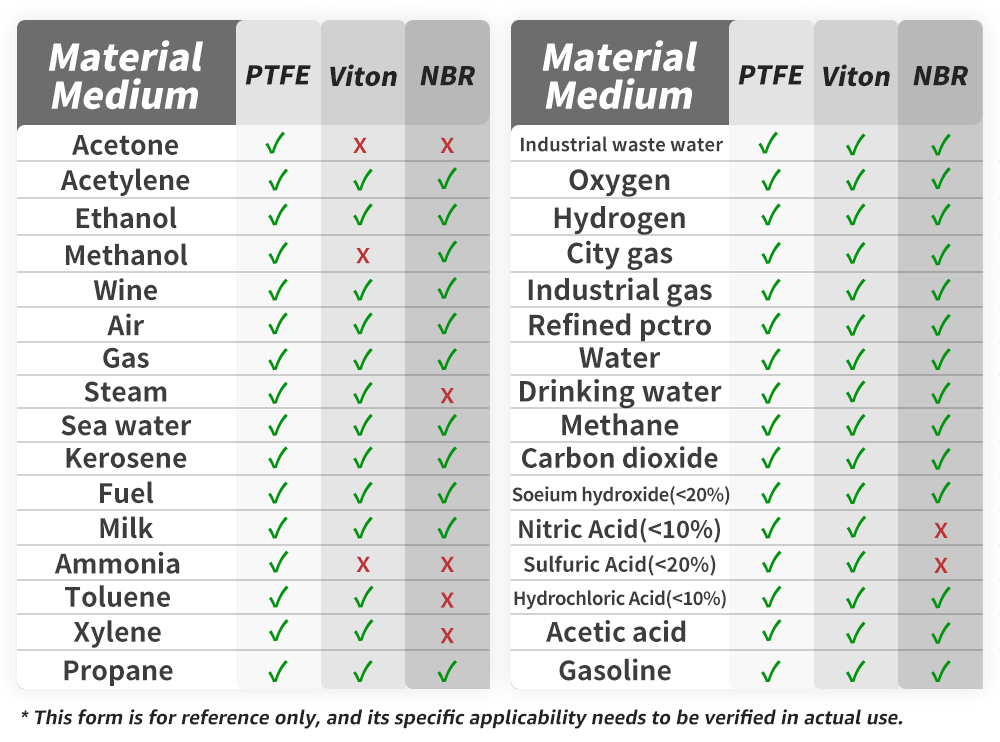
*Σημαντικό: Τα σημάδια ελέγχου (√) υποδηλώνουν μόνο υπό όρους καταλληλότητα. οι σταυροί (×) υποδηλώνουν πλήρη ασυμβατότητα.