
How to Choose the Right Laboratory Gloves: A Practical Guide to Pure Nitrile Protection
The right laboratory glove is more than something you simply put on. It should match the chemicals you handle, the intensity of the task, the time you wear it, and the cleanliness requirements of your work. This guide provides a practical way to choose confidently.
Choose by protection, fit, and task
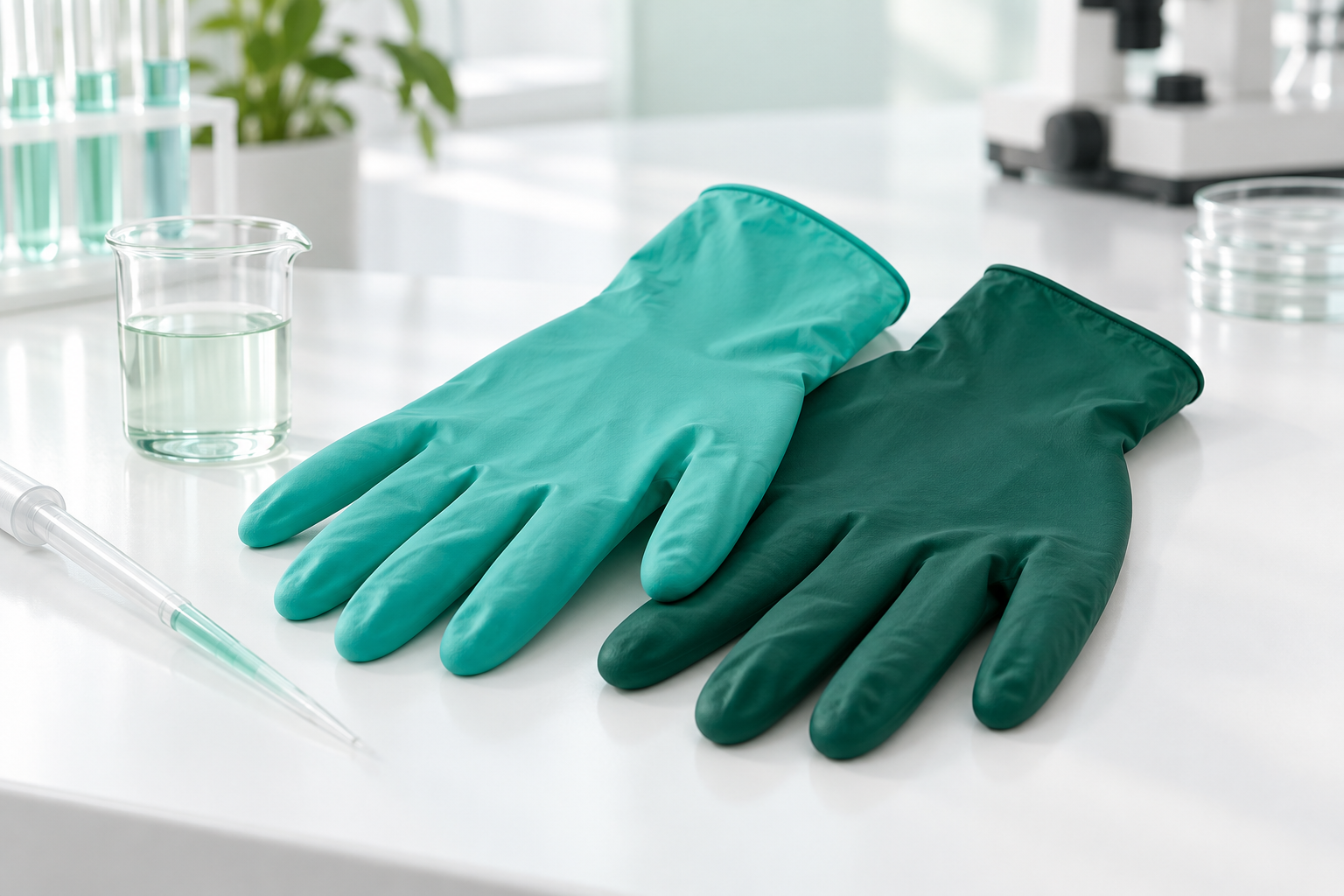
Start with the risk, then confirm the comfort
The best choice balances three questions: what protection is required, how precisely you need to work, and what cleanliness or compliance rules apply. Treat the product specification as the final checkpoint.
- Identify the hazard
- Choose the material and thickness
- Confirm size, finish, and documentation
Four key factors when choosing laboratory gloves
What will you handle?
List the chemicals, solvents, samples, and cleaning agents used in your workflow. Then review the glove's chemical compatibility data. Do not rely only on broad claims such as “chemical resistant.”
How much protection is needed?
Routine pipetting and sampling prioritize dexterity. Work involving sharp tools, friction, or extended contact may require greater thickness, tear resistance, or puncture resistance.
How long will you wear them?
For longer tasks, prioritize fit, comfort, and reduced hand fatigue. Disposable gloves should be changed according to contamination risk, even when they appear intact.
What are the cleanliness requirements?
Cleanrooms, cell culture, food testing, and regulated environments may require low particles, low residues, sterile packaging, or specific standards. Follow the requirements of your application.
Common laboratory glove materials
| Material | Main characteristics | Typical applications | What to check |
|---|---|---|---|
| Nitrile | Contains no natural latex proteins and generally offers a good balance of fit, flexibility, and everyday protection. | Laboratory work, inspection, sampling, cleaning, and general handling. | Formulation, thickness, and chemical resistance vary by product. Check the specific data. |
| Latex | Good elasticity and tactile sensitivity. | Tasks where flexibility is important and the user has no latex sensitivity. | Natural latex proteins may cause allergic reactions; chemical resistance is application-dependent. |
| Vinyl | Economical and easy to put on, but typically less elastic and less form-fitting. | Short, low-risk tasks where fine dexterity is not critical. | It should not be treated as a universal substitute for chemical protection. |
| Heavy-duty specialty gloves | Designed for higher mechanical protection or specific chemical hazards. | Corrosive chemicals, demanding environments, or tasks requiring enhanced protection. | Dexterity may be reduced. Select according to the hazard and applicable standard. |
Match the glove to the task
For routine laboratory work
Choose a well-fitting disposable glove with good dexterity for pipetting, weighing, labeling, sample transfer, and general bench work. Pure nitrile is a practical everyday option when it matches the chemical compatibility requirements.
For higher-risk operations
Consider specialized, heavier-duty protection for concentrated corrosives, prolonged immersion, cryogenic materials, sharps, or high mechanical hazards. A disposable examination glove may not be sufficient.
Fit matters more than most people expect
A good fit supports safe, precise movement
Gloves that are too tight can cause fatigue and split more easily. Gloves that are too loose can reduce tactile control and catch on equipment. Check the fingertips, palm, and wrist before starting work.
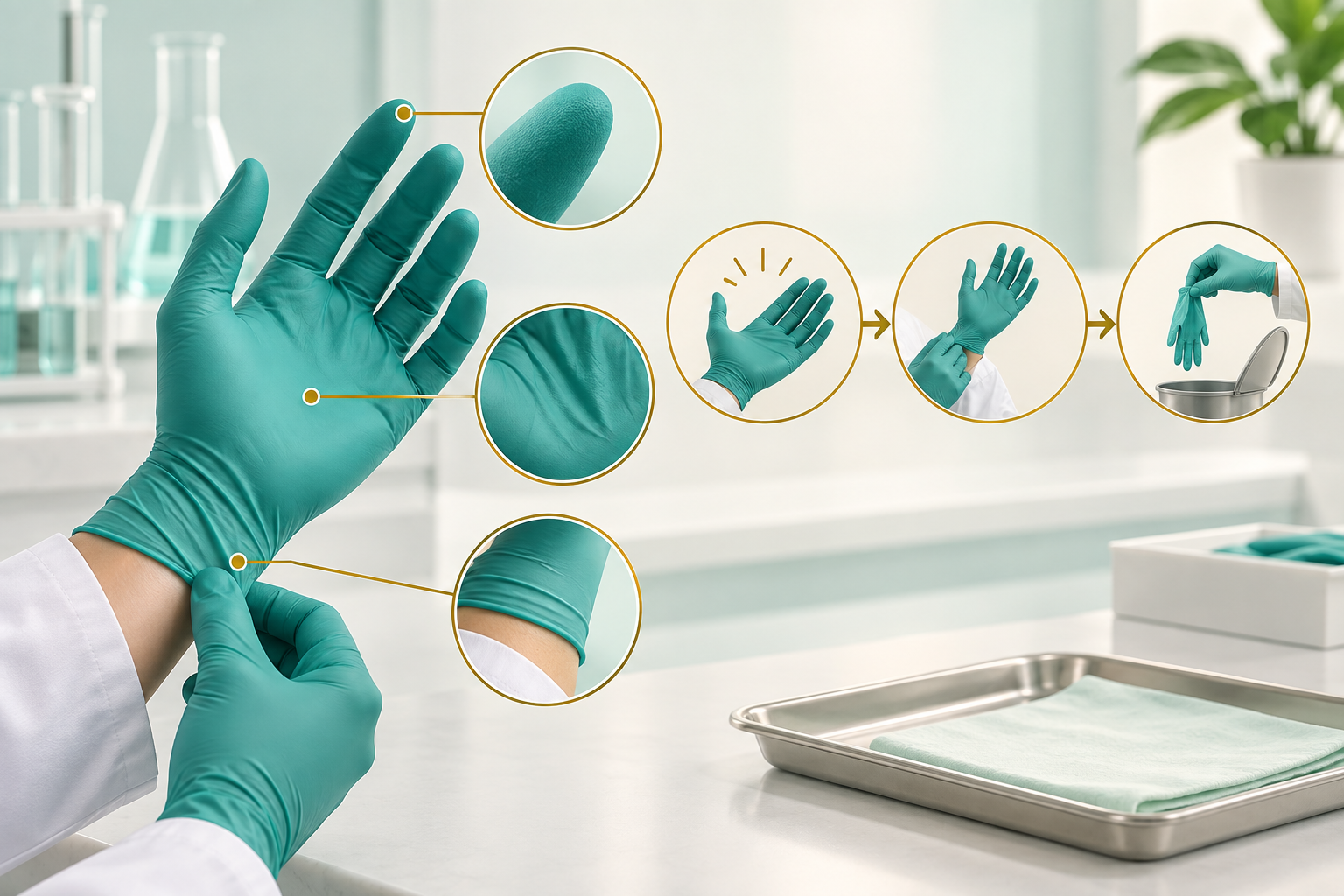
Quick check: close your hand, pick up a small object, and move your fingers. The glove should stay secure without pulling sharply across the knuckles.
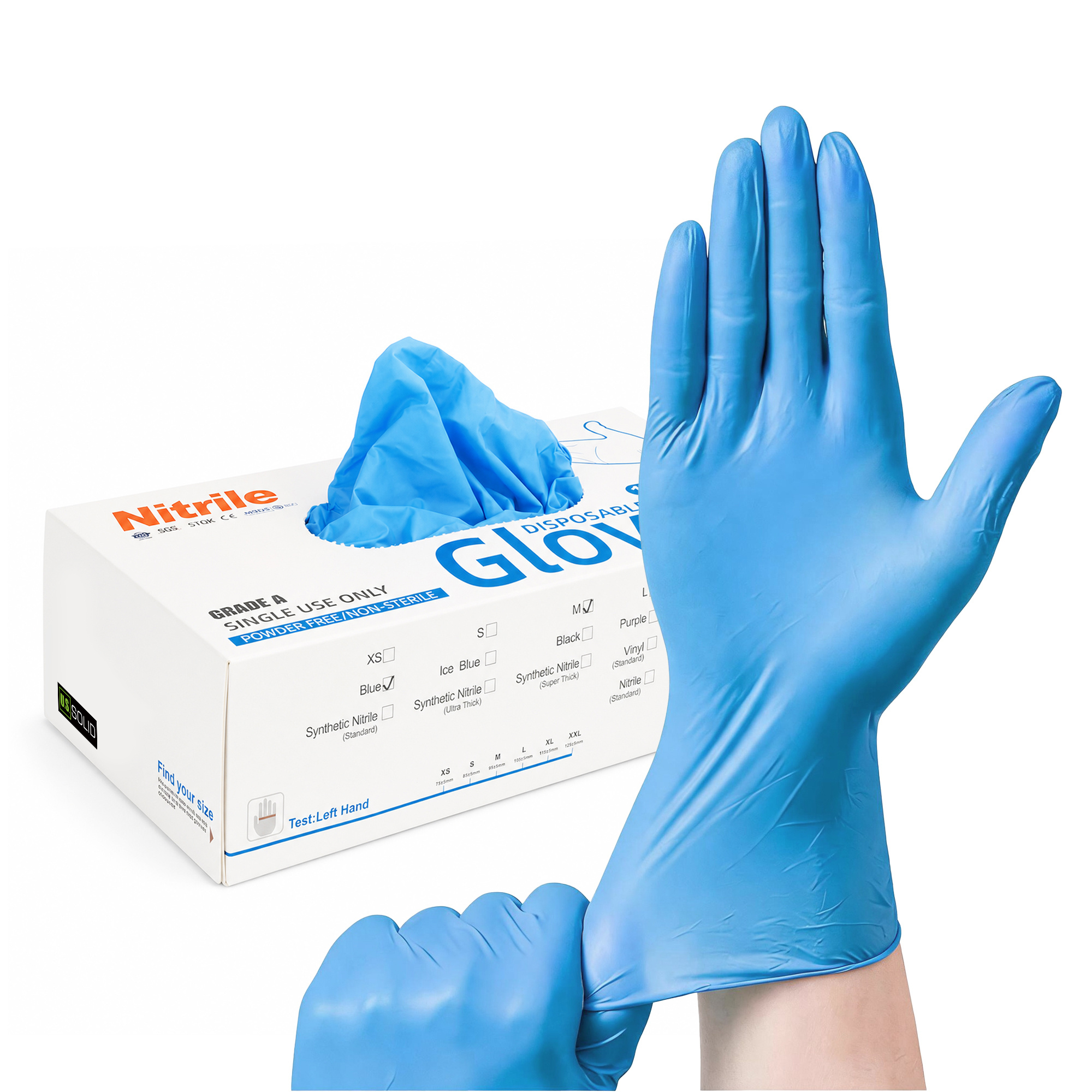
Pure Nitrile Laboratory Gloves
Reliable disposable protection for routine laboratory work, testing, and sample handling—with a balanced combination of protection, flexibility, and wearing comfort.
- Pure nitrile material with no natural latex proteins
- Close-fitting design for pipetting, sampling, and other precise tasks
- Suitable for timely replacement based on contamination risk
- Multiple sizes available for different hand shapes
Why choose pure nitrile for laboratory work?
Nitrile contains no natural latex proteins, making it a practical choice for users who want to reduce concerns related to latex exposure. A close-fitting glove can also support better tactile feedback and reduce distracting movement during precise work.
“Pure nitrile” does not mean that a glove is resistant to every chemical. Before use, consider the glove's thickness, formulation, chemical concentration, contact time, and temperature, and review the relevant compatibility information.
Product specifications: Material, thickness, surface finish, sizes, packaging, certifications, and color should be confirmed in the applicable product specification sheet and on the product label.
A simple four-step wearing routine
Inspect
Check for tears, pinholes, and damaged packaging.
Fit
Select the correct size and avoid excessive stretching.
Change
Replace after contamination, damage, or task changes.
Remove
Peel away carefully, dispose of safely, and wash hands.
Build glove changes into the workflow

Small habits create consistent protection
Keep replacement gloves accessible, define change points in the SOP, and train the whole team on safe removal. This reduces the chance of carrying contamination from one task or surface to another.
Remember: a damaged or contaminated glove should be changed immediately.
Purchase checklist
Size and fit
Fingertips should not feel cramped, while the palm should not be loose. The glove should stay in place without excessive stretching.
Surface finish
For precise handling, textured or treated fingertips may improve grip. For clean applications, check particle and residue requirements.
Packaging and traceability
Confirm lot number, production date, expiry date, storage conditions, and package integrity for easier laboratory control and traceability.
Application testing
When standardizing gloves for a team, test a small batch in the actual workflow before placing a larger order.
Three common selection mistakes
Using one glove for every hazard
No single disposable glove protects equally well against every chemical or physical risk. Match the product to the actual task.
Choosing only by price
A low unit price can be offset by poor fit, frequent tearing, slow work, or excessive changes. Consider total use cost and operator comfort.
Ignoring the change procedure
Correct replacement is part of protection. Define when gloves must be changed and make the process easy for everyone to follow.
Skipping a real-world trial
Test grip, dexterity, and comfort in the actual workflow before adopting a glove across the laboratory.
Frequently asked questions
Can nitrile gloves handle every chemical?
No. Compatibility depends on the chemical, concentration, contact time, temperature, and glove specification. Review compatibility data and the SDS; for high-risk work, choose a dedicated heavy-duty glove.
Are pure nitrile gloves suitable for continuous wear?
Follow your laboratory's change schedule and risk controls. During extended wear, watch for heat, sweat, or skin discomfort, and replace the gloves or stop work if needed.
How should we standardize gloves for a team?
Map common tasks and chemicals, estimate the size mix, then validate dexterity, durability, and compatibility through a small practical trial before confirming the final specification.