
316 vs 304 Stainless Steel: What's the Difference and How to Choose?
Introduction
When selecting stainless steel for industrial valves, lab equipment, or fluid control systems, two grades come up most often: 304 and 316. Both are austenitic stainless steels with excellent corrosion resistance — but they are not interchangeable. Choosing the wrong grade can lead to premature corrosion, equipment failure, or costly replacements.
This guide breaks down the key differences and helps you make the right choice for your application.
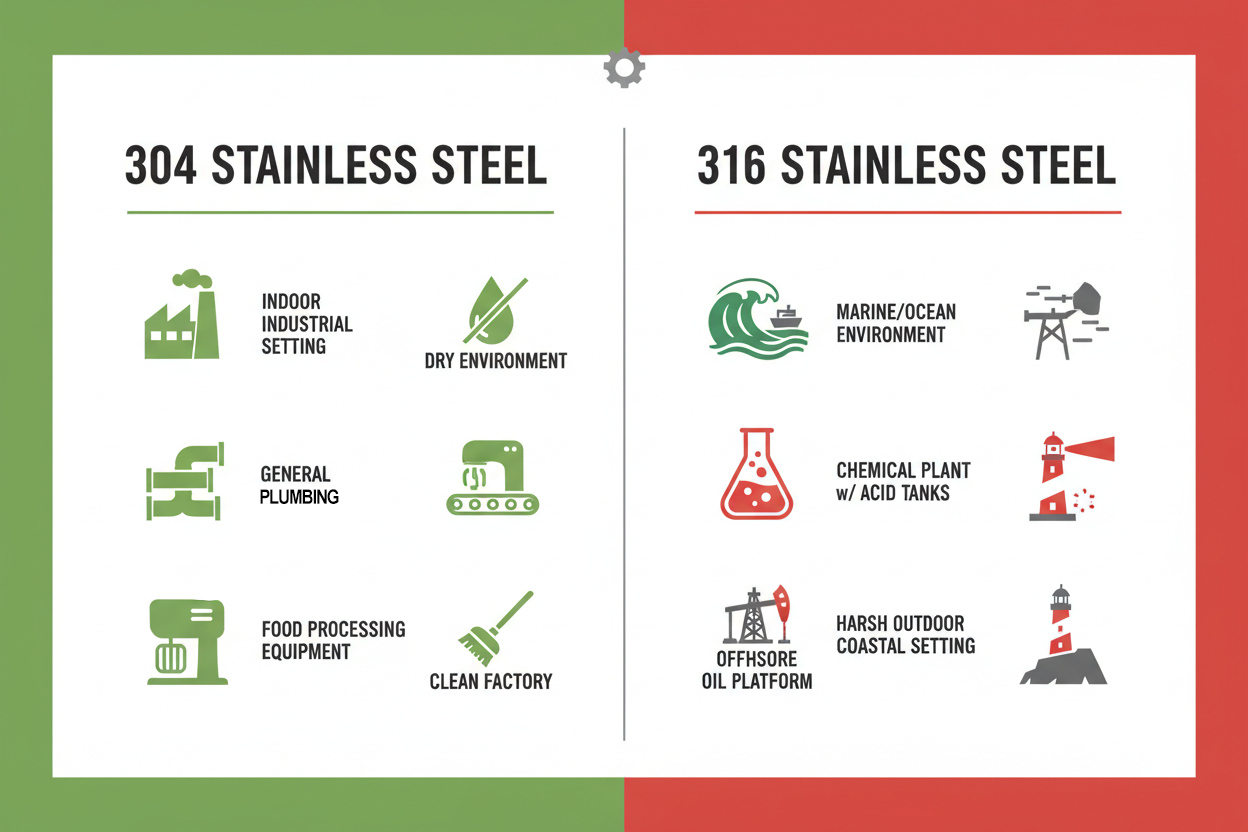
Fig.1 — 304 SS suits dry/indoor environments; 316 SS excels in marine, chemical, and harsh conditions.
Chemical Composition: The Core Difference
| Property | 304 Stainless Steel | 316 Stainless Steel |
|---|---|---|
| Chromium (Cr) | 18–20% | 16–18% |
| Nickel (Ni) | 8–10.5% | 10–14% |
| Molybdenum (Mo) | None | 2–3% |
| Carbon (C) | ≤0.08% | ≤0.08% |
The critical differentiator is molybdenum (Mo). This element gives 316 significantly enhanced resistance to chlorides, acids, and harsh chemicals — making it the preferred choice in demanding environments.
Corrosion Resistance
304 offers good general corrosion resistance and performs well in most everyday environments. However, it is vulnerable to chloride-induced pitting and crevice corrosion, especially in saltwater or chemical-heavy settings.
316 excels in:
- Marine and coastal environments
- Chemical processing with acids (sulfuric, phosphoric)
- High-chloride environments (seawater, brine, de-icing salts)
- Pharmaceutical and food-grade applications requiring frequent sterilization
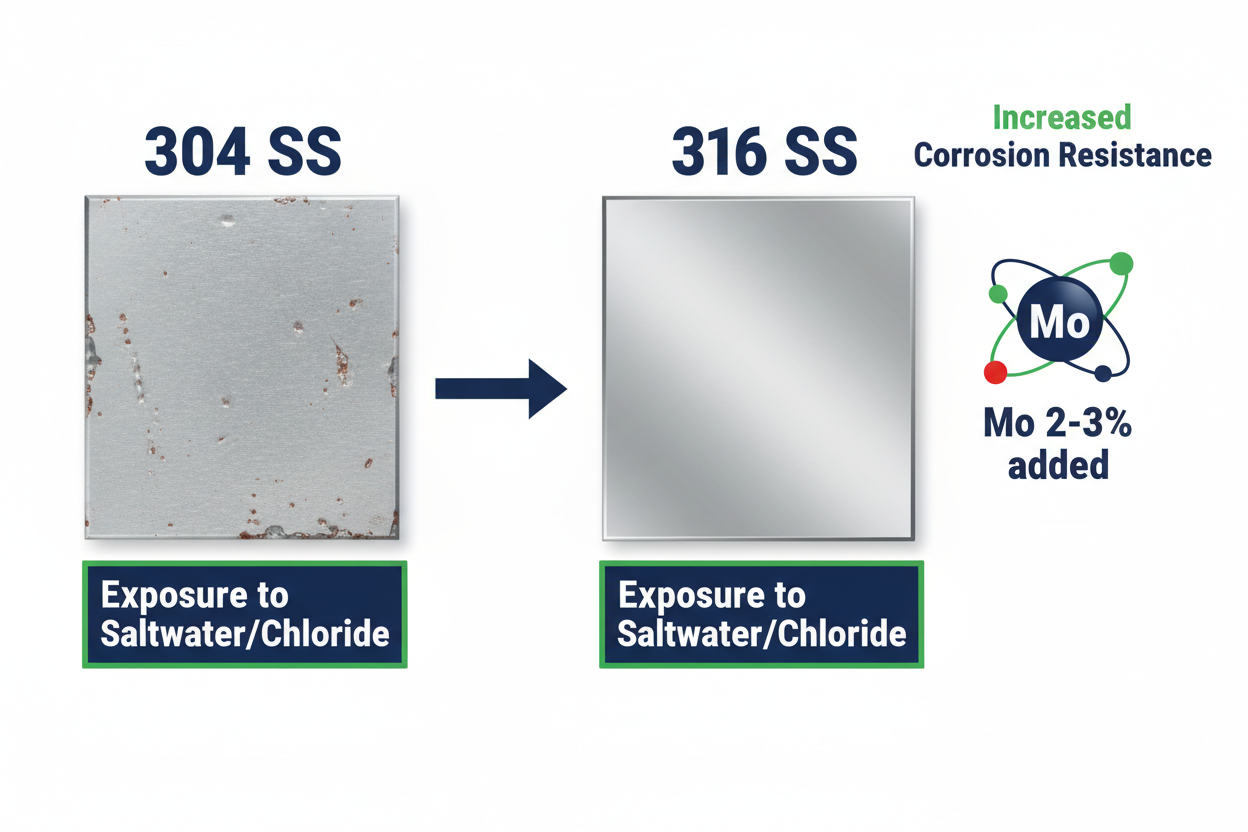
Fig.2 — The addition of Molybdenum (Mo) in 316 SS significantly reduces chloride-induced pitting corrosion.
Mechanical Properties
| Property | 304 | 316 |
|---|---|---|
| Tensile Strength | ~515 MPa | ~515 MPa |
| Yield Strength | ~205 MPa | ~205 MPa |
| Hardness (Brinell) | ~201 HB | ~217 HB |
| Max Service Temp | ~870°C | ~870°C |
316 has a slight edge in high-temperature strength and performs better under sustained thermal stress in corrosive environments.
Cost Comparison
How to Choose: A Practical Decision Guide
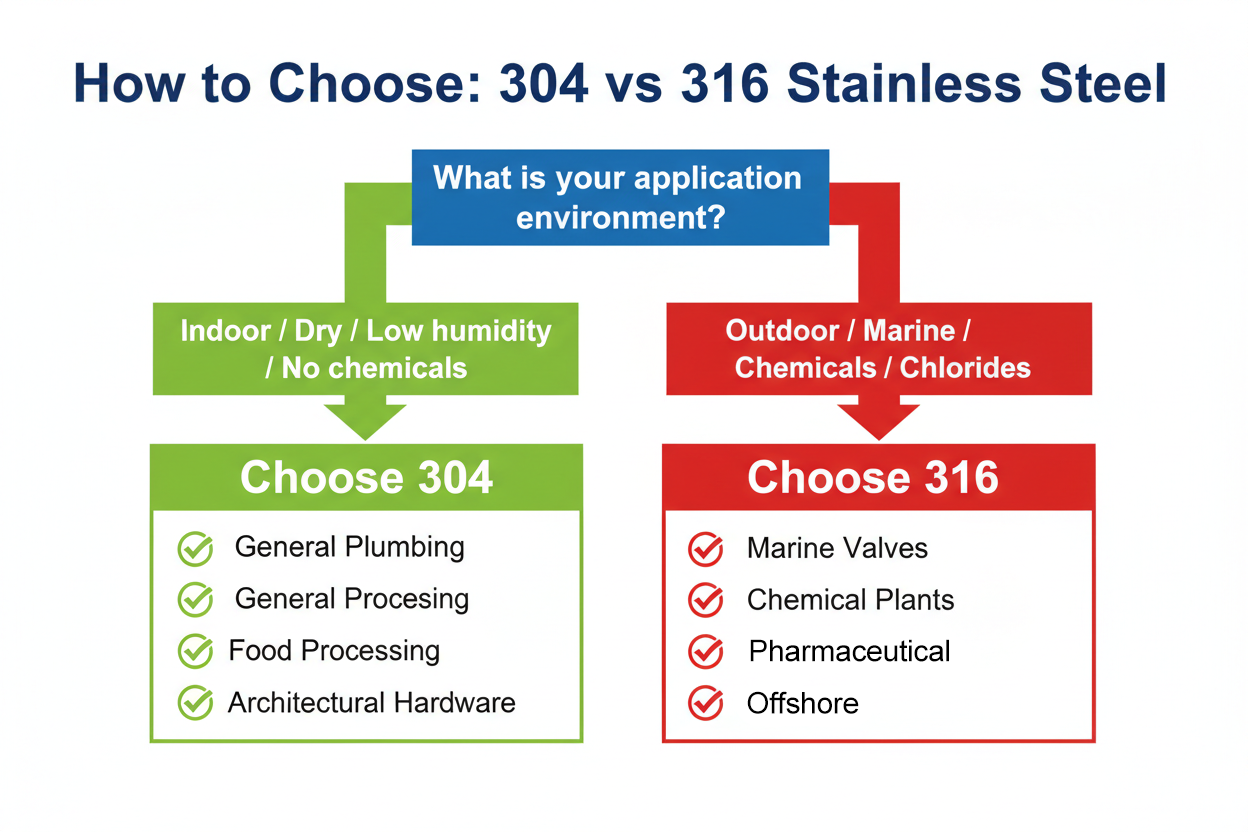
Fig.3 — Use this decision guide to quickly determine which stainless steel grade fits your application.
Choose 304 if:
- The environment is dry, indoor, or low-humidity
- No exposure to chlorides, saltwater, or aggressive chemicals
- Budget is a primary consideration
- Applications: general plumbing, food processing equipment (non-marine), architectural hardware, storage tanks for non-corrosive media
Choose 316 if:
- Exposure to saltwater, seawater, or marine atmospheres
- Contact with chlorides, acids, or industrial chemicals
- Pharmaceutical, biotech, or medical-grade requirements
- Outdoor coastal installations or chemical plant piping
- Applications: marine valves, chemical dosing systems, lab fittings, offshore equipment, pharmaceutical tubing
Application Examples in Valve Selection
For ball valves, gate valves, and needle valves used in:
| Application | Recommended Grade |
|---|---|
| Water treatment / municipal systems | 304 typically sufficient |
| Chemical injection lines | 316 strongly recommended |
| Offshore oil & gas | 316 or higher alloy (316L, Duplex) |
| Food & beverage processing | 316L preferred for weld integrity |
| General industrial automation | 304 cost-effective and reliable |
316L and 304L: What Does the "L" Mean?
Summary
| Factor | 304 | 316 |
|---|---|---|
| Corrosion Resistance | Good | Excellent |
| Chloride Resistance | Moderate | High |
| Cost | Lower | Higher (~20–30%) |
| Weldability | Good | Good |
| Best For | General use | Harsh / chemical / marine |
Final Thoughts
Both 304 and 316 are workhorses of the stainless steel world — the right choice depends entirely on your operating environment and budget. When in doubt, err toward 316 for any application involving moisture, chemicals, or outdoor exposure. For controlled indoor environments with non-corrosive media, 304 delivers excellent performance at a lower cost.