
Why Choose Motorized Ball Valves?
Why Choose Motorized Ball Valves?
Introduction
In the realm of modern fluid control, automation plays a critical role in enhancing both operational efficiency and system safety. Selecting the right valve is essential for optimizing specific industrial or residential applications. Among the various options available, motorized ball valves have emerged as one of the most reliable and versatile solutions in today’s market.
This article provides an in-depth look at motorized ball valves, covering their fundamental design, operational mechanisms, and key considerations for selecting the ideal valve for your needs.
What is a Motorized Ball Valve?
A motorized ball valve utilizes an electric motor to regulate the flow of liquids, gases, and other substances within a pipeline. Due to their user-friendly operation, autonomous capabilities, and proven durability, these valves are widely adopted in modern agriculture, HVAC systems, and industrial automation.
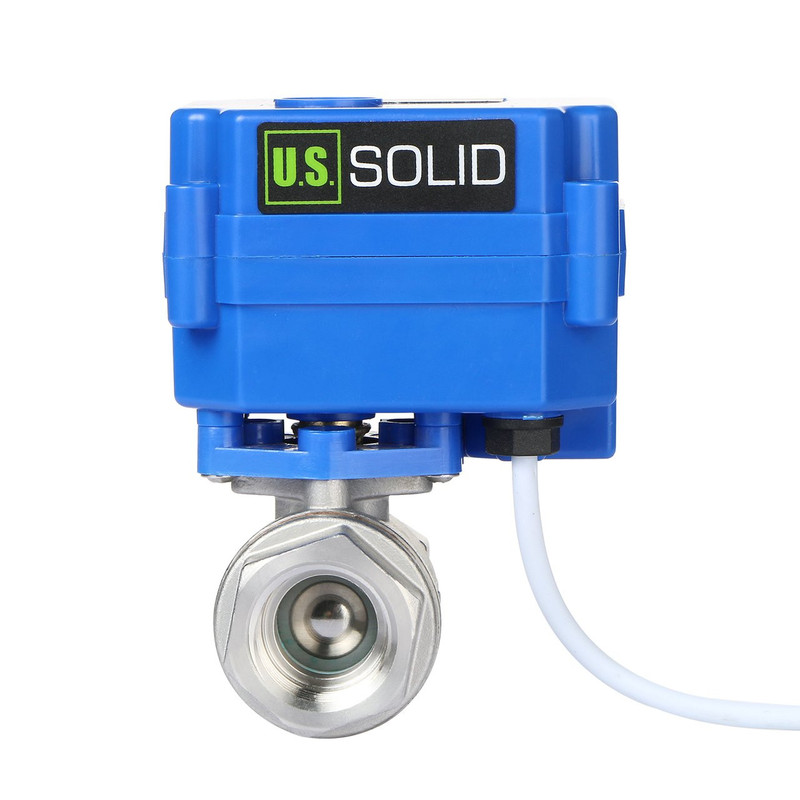
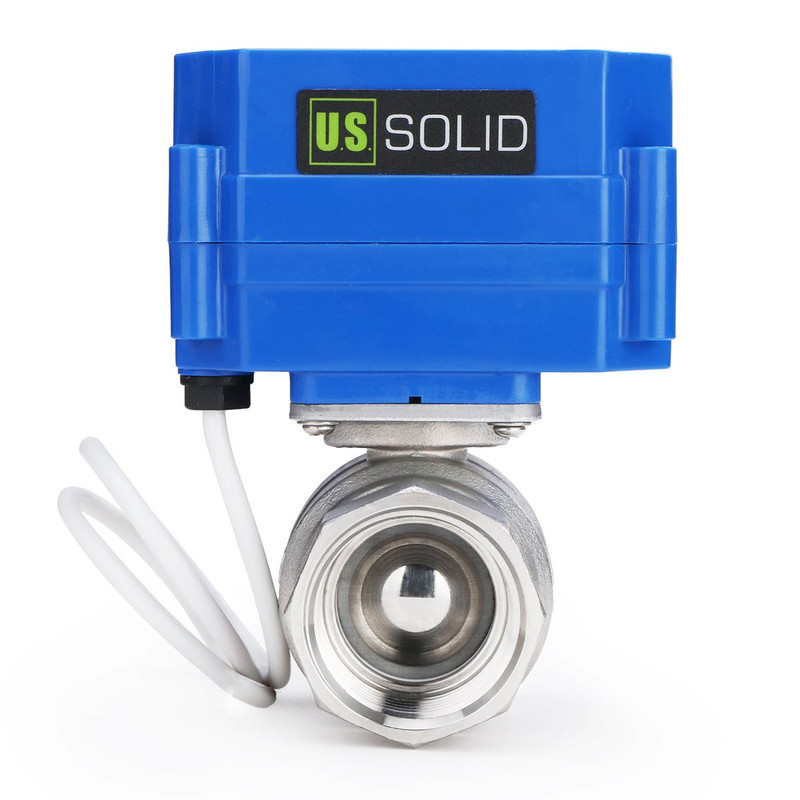
The Construction of a Motorized Ball Valve
In the industry, motorized ball valves are also commonly referred to as electric ball valves or actuated ball valves. They typically consist of two primary components:
1. The Ball Valve Body
- Mechanism: It features a precision-machined spherical ball with a bore through the center.
- Operation: When the actuator rotates the ball 90 degrees, the bore aligns with the pipeline to allow fluid passage (Open) or shifts perpendicular to block the flow (Closed).
2. The Electric Actuator
- Components: This is the electrical power unit mounted atop the valve body. It houses the motor and gear train required to rotate the ball automatically.
- Function: It enables integrated system control, making it ideal for frequent switching, automatic shut-off, or remote fluid diversion.
- Return Methods:
- 2-Wire Control (Auto-Return): The actuator charges an internal capacitor during opening. Upon power loss, the stored energy drives the valve back to its default position. This is a "safety-first" design essential for emergency shut-offs.
- 3-Wire Control (Stay-Put): This setup features a common wire and two control wires for "Open" and "Close" commands. The valve rotates in the direction of which wire receives power.
- Fail-Safe Positioning: One of the most significant advantages of certain models is the "Stay-Put" feature. If power is lost mid-operation, the valve remains in its last position until power is restored and a new command is given, preventing unexpected flow changes.
How to Choose the Right Ball Valve?
- Environmental Factors: For valves exposed to harsh conditions, moisture, or dust, select products with a high IP rating (such as IP67).
- Fluid Medium & Material:
- Stainless Steel: Essential for drinking water (ensuring compliance with health standards) and mildly corrosive fluids.
- Brass: Suitable for general water service and non-corrosive media.
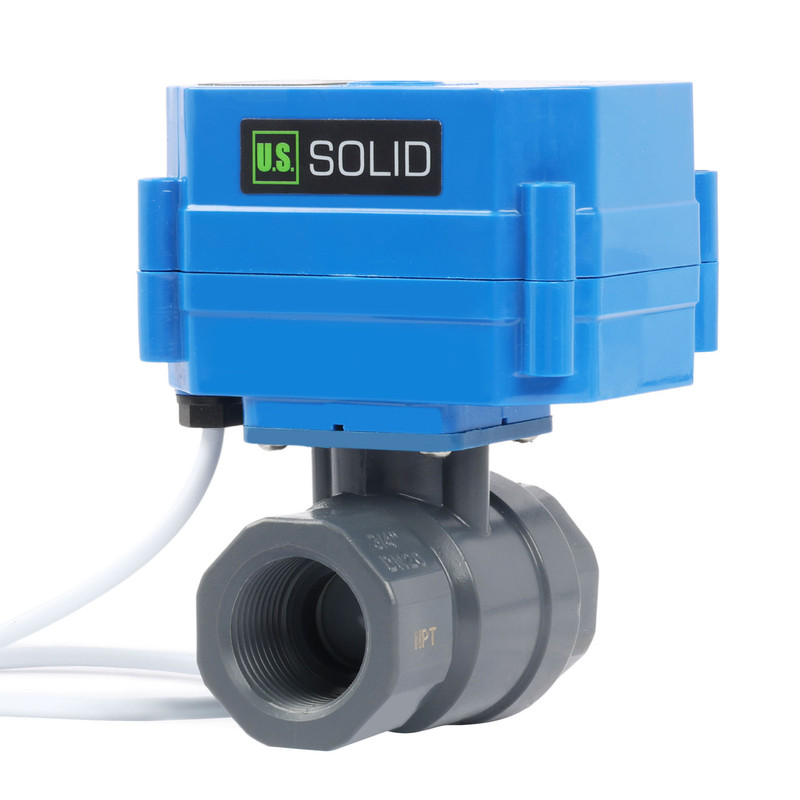
- UPVC, CPVC: An excellent choice for handling corrosive chemical media, especially CPVC.
- Flow Capacity: Opt for a Full Port design if you require maximum flow with minimal pressure drop.
.jpg)
Motorized Ball Valve vs. Solenoid Valve
|
Feature |
Motorized Ball Valve |
Solenoid Valve |
|
Control & Speed |
Slow actuation (4-15s); prevents water hammer. |
Instantaneous (milliseconds); risk of water hammer. |
|
Pipe Size & Flow |
Ideal for large-diameter, high-flow systems. |
Best for small-diameter, low-flow systems. |
|
Pressure & Media |
Tolerant to impurities; works at zero pressure. |
Requires strictly clean media; often needs pressure diff. |
|
Installation |
Flexible orientation; robust IP65/IP67 ratings. |
Usually requires horizontal installation. |
|
Life & Power |
Energy-efficient (only uses power during movement). |
High power use (requires constant power to stay open). |
Quick Selection Guide
- Choose Motorized Ball Valves if: You need to prevent water hammer, require high flow capacity, handle media with slight impurities, or need a valve to stay in position for extended periods.
- Choose Solenoid Valves if: You require near-instantaneous response times and are working with a perfectly clean, debris-free medium at high switching frequencies.
2-Way vs. 3-Way Ball Valves: Understanding the Differences
1. Port Configuration & Connection:
2-Way Ball Valves: These are standard On/Off valves featuring two ports. They are designed for straight-through flow in a single pipeline. When the valve is open, fluid flows; when closed, the flow stops completely.
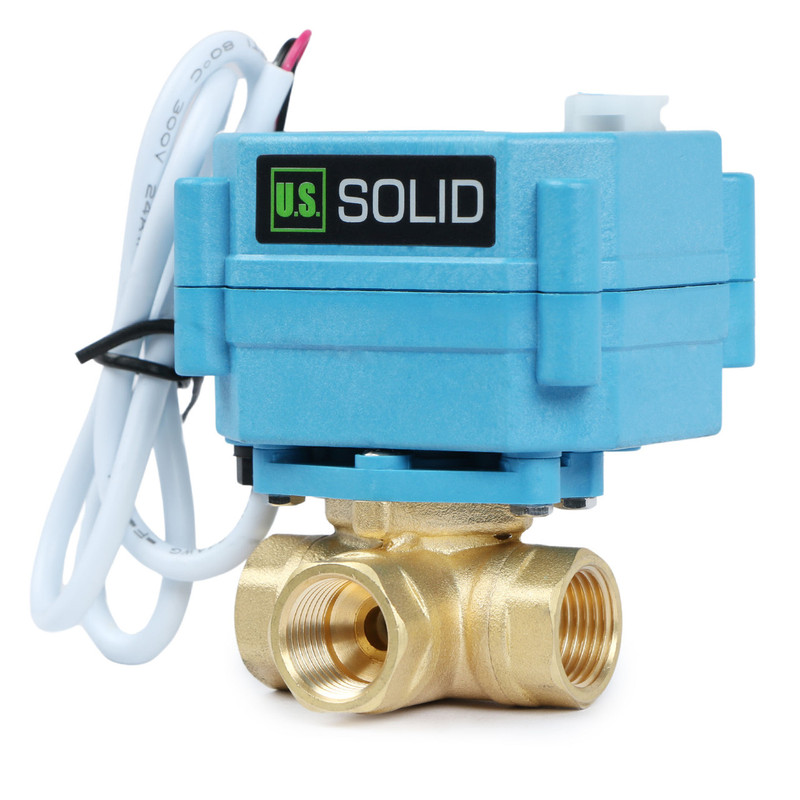
3-Way Ball Valves: These feature three ports and offer much more versatility. Depending on the ball’s internal bore, they are typically available in two configurations:
L-Port: Used for diverting flow (switching flow from one common inlet to one of two different outlets).
T-Port: Used for mixing or blending (combining two fluid sources into one) or allowing flow to all three ports simultaneously.
2. Functional Capabilities:
2-Way Ball Valves: Their primary function is simple unidirectional flow control. They are the "light switches" of the plumbing world—highly efficient at shutting off or opening a single line with minimal pressure drop.
3-Way Ball Valves: Beyond simple shut-off, these valves can redirect, mix, or bypass fluid. By rotating the actuator, you can change the flow ratio or switch between different pipeline branches without needing multiple 2-way valves. This makes them a space-saving and cost-effective solution for complex systems.
3. Application Scenarios:
2-Way Ball Valve: The go-to choice for standard residential and industrial applications, such as basic water supply, drainage systems, and simple gas shut-off lines where only one destination for the fluid exists.
3-Way Ball Valve: Critical for demanding industries like petroleum, chemical processing, and municipal water management. They are ideal for heating/cooling bypass loops, chemical blending, or any system where fluid needs to be diverted to different processing units.
.jpg)
Conclusion
U.S. Solid motorized ball valves combine the time-tested durability of traditional hardware with the precision of contemporary, high-efficiency actuators. Whether you are optimizing industrial automation, agricultural irrigation, or professional water treatment systems, our valves deliver the reliable, effective support your infrastructure deserves.
Upgrade to U.S. Solid today—the premier choice for enhancing the efficiency and automation of your processing systems.