
GSM Scale: The Secret Weapon Behind Quality Control in Textile & Manufacturing
In industries such as textiles, non-wovens, paper, plastic film, leather, and packaging, one single measurement almost entirely determines your production cost, product quality, and order fulfillment—Grammage (GSM).
The instrument used to accurately measure this value is the subject of today’s deep dive: the GSM scale. For those new to material measurement, the questions often arise: What exactly is a GSM scale, and why does it play such an irreplaceable role in the industrial supply chain?
1. In-Depth Definition: What Exactly Is a GSM Scale?
Simply put, a GSM scale (also known as a fabric weight scale or gram weight balance) is a precision testing instrument designed to measure the weight per unit area of sheet materials.
GSM stands for "Grams per Square Meter," which is the international standard unit for measuring material density. The core mission of a GSM scale is clear: to provide a standard, stable, and repeatable reading—usually with a precision of 0.01g—to confirm whether a material meets the thickness, density, and specific requirements defined by the customer.
More Than Just a "Scale"
While a standard electronic scale only tells you the absolute weight of an object, a GSM scale combines area calculation with precision weighing. Whether it is silk, paper, non-woven fabric, or industrial film, almost all flat or sheet-like products rely on GSM scale measurement. It converts the "weight" of a material into the "density" property, allowing materials of different sizes and batches to be measured against a uniform quality standard.
2. Why Is a GSM scale the "Lifeblood" of Your Industry?
Without a GSM scale, production and quality control rely solely on "feel and experience." In modern manufacturing, a GSM scale helps businesses solve four critical problems:
Precision Cost ControlIn raw material procurement, grammage directly dictates cost. A GSM that is too high means excessive material consumption and waste; a GSM that is too low results in thin, under-strength products that face rejection risks. A GSM scale keeps variation to a minimum, ensuring production remains both economical and compliant.
Physical Stability of QualityConsistency in thickness is the cornerstone of brand reputation. By performing random batch inspections with a GSM scale, you can monitor the stability of your production line, ensuring products don't fluctuate in quality from day to day.
The Key to Export and Brand OrdersFor export orders, OEM contracts, or large-scale tenders, customers almost always specify a strict GSM tolerance range in the contract. Accurate GSM data is a prerequisite for passing third-party inspections and avoiding costly delivery delays.
The First Step Toward Digital ManagementModern quality control requires data to be authentic and traceable. Manual recording is no longer sufficient for industry demands. Modern GSM scales support data export and connectivity, representing the first step toward standardized, digital factory management.
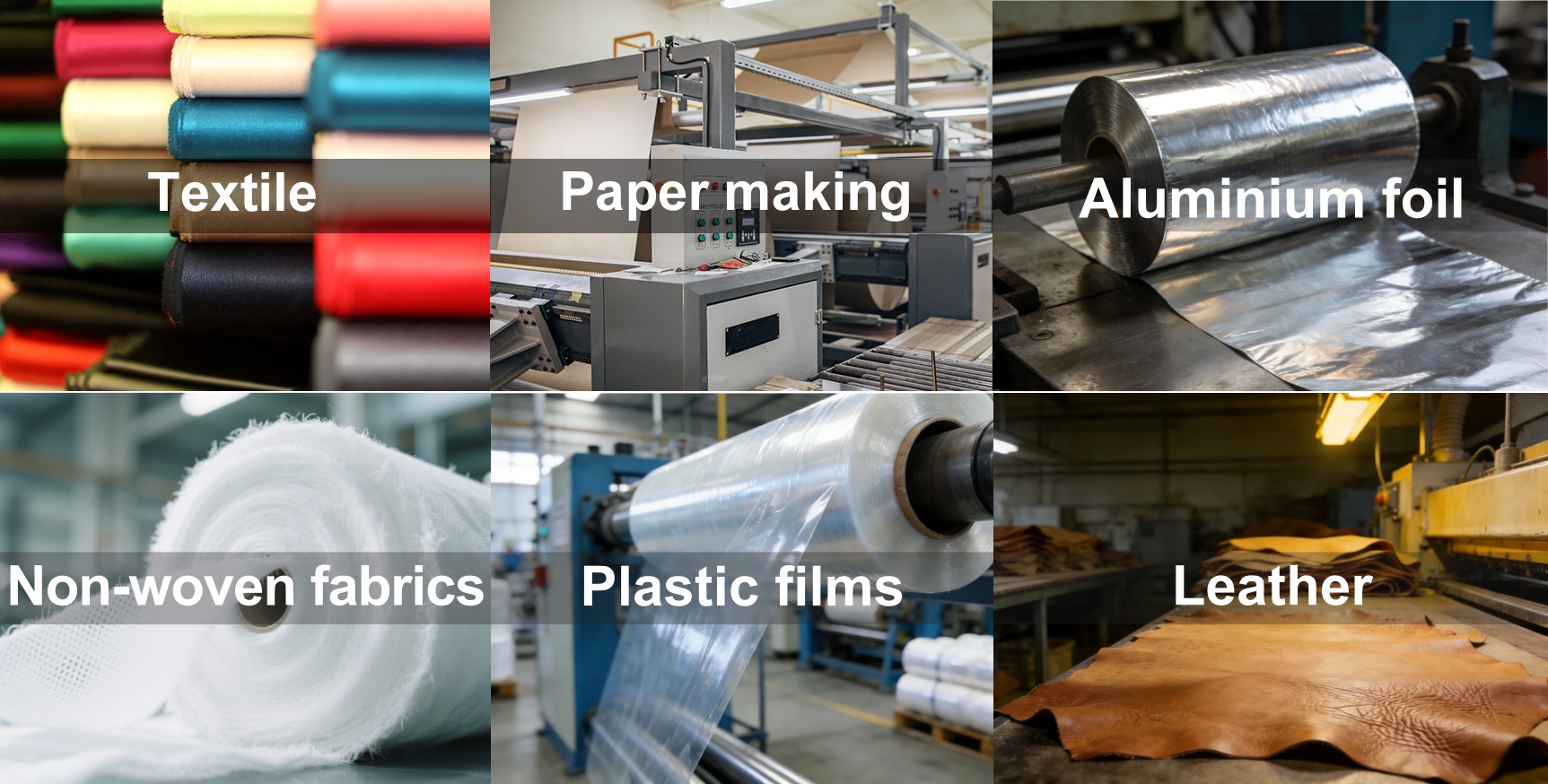
3. Wide-Ranging Industrial Applications
The applications for GSM scales are far more extensive than many realize, covering nearly every industry involving "rolls" or "sheets":
- Textiles & Apparel: Monitoring the warp/weft density and weight stability to ensure the hand-feel and drape of the finished garment.
- Medical & Hygiene (Non-woven): Testing the filtration efficiency and absorbency of masks, protective suits, and hygiene products (properties highly correlated with GSM).
- Paper & Packaging: Verifying the specifications of various cardboards, office papers, and packaging materials.
- Films & Coatings: Measuring the uniformity of PE, PET, and other plastic films, as well as the coating weight on aluminum foils and composite membranes.
- Leather & Construction: Quality testing for synthetic leather, carpets, curtains, and various home textiles.
4. Conclusion: A Small Instrument with Huge Impact
A GSM scale is not merely an optional accessory; it is a productivity powerhouse for controlling costs, ensuring quality, and winning orders.
In today's competitive marketplace, a deviation of just a few grams can impact a product's durability, opacity, and ultimately, your profit margin. Whether you choose a traditional physical sampling method or an advanced AI vision identification system, the goal remains the same: to provide your customers with a professional, verifiable commitment to quality.
Looking for a precision GSM scale to boost your lab's efficiency? U.S. Solid offers a range of industrial-grade GSM scale solutions—from classic, reliable physical sampling scales to high-efficiency intelligent vision scales—helping you master every gram of quality.
🔬 Explore U.S. Solid GSM Scale
🎁 Exciting News: Something Special Is Coming!
We're thrilled to announce that U.S. Solid is about to launch an all-new GSM Scale Starter Kit—a budget-friendly solution designed for teams in the early stages of quality control setup who need reliable testing capabilities without breaking the bank.
What Makes This Kit Special?
- ✅ Professional Sample Cutter: Standardized sampling for consistent results
- ✅ Complete Testing Solution: Everything you need to get started in one package
- ✅ Budget-Conscious Value: Perfect for startups, small labs, and initial quality control investments
Want to be the first to know when it launches?
Stay tuned to our updates, or contact our team to get early access information!
🔔 Follow us for the official launch announcement—you won't want to miss this!