
Introduction
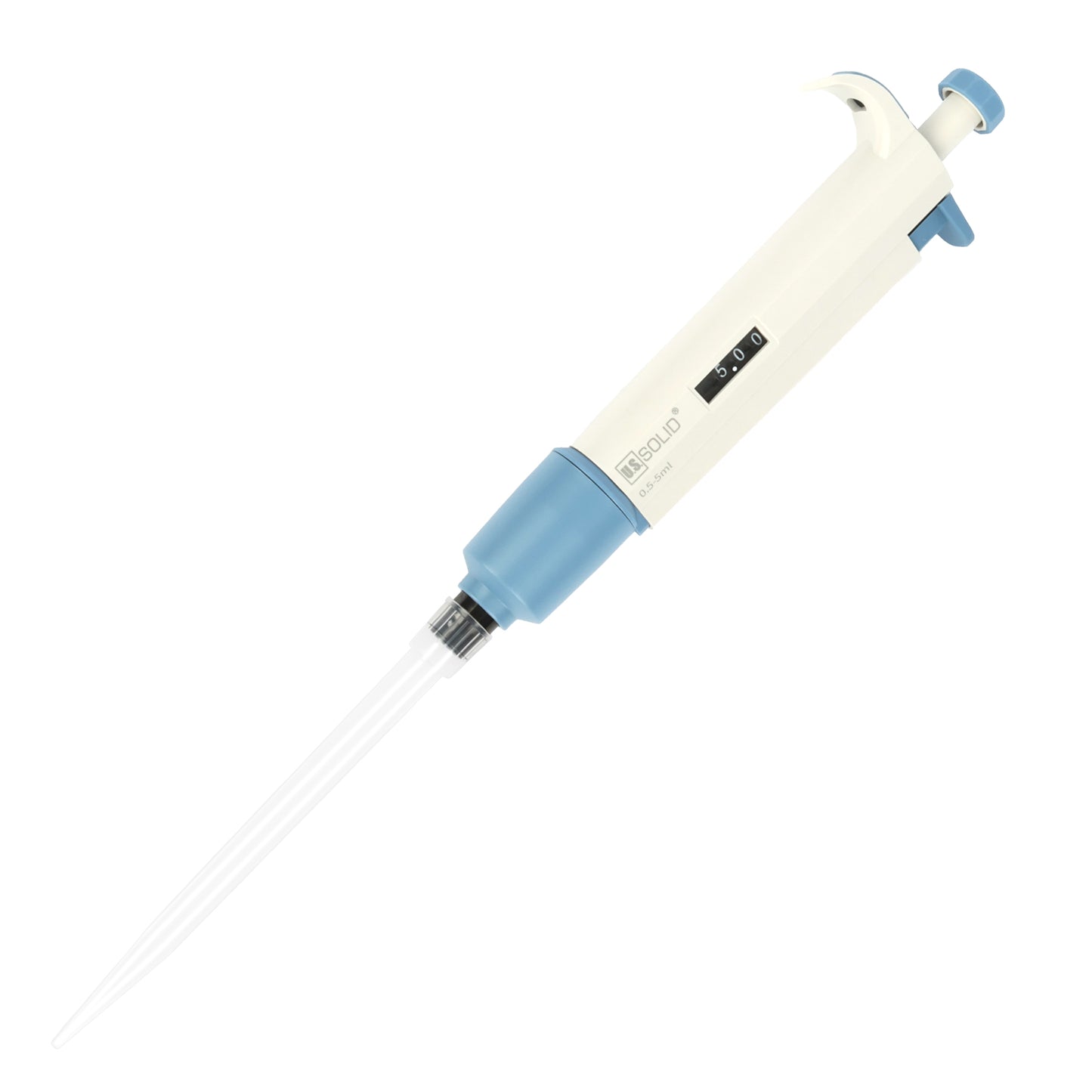
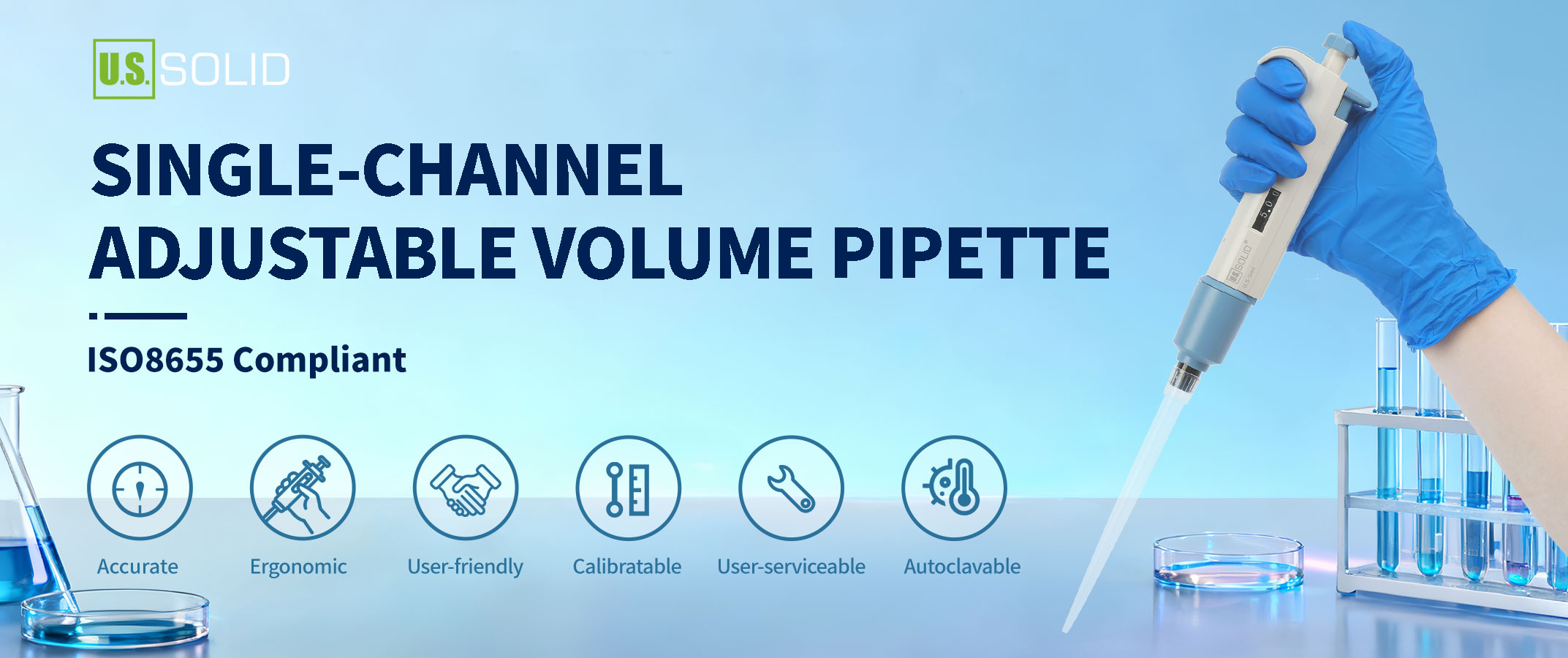
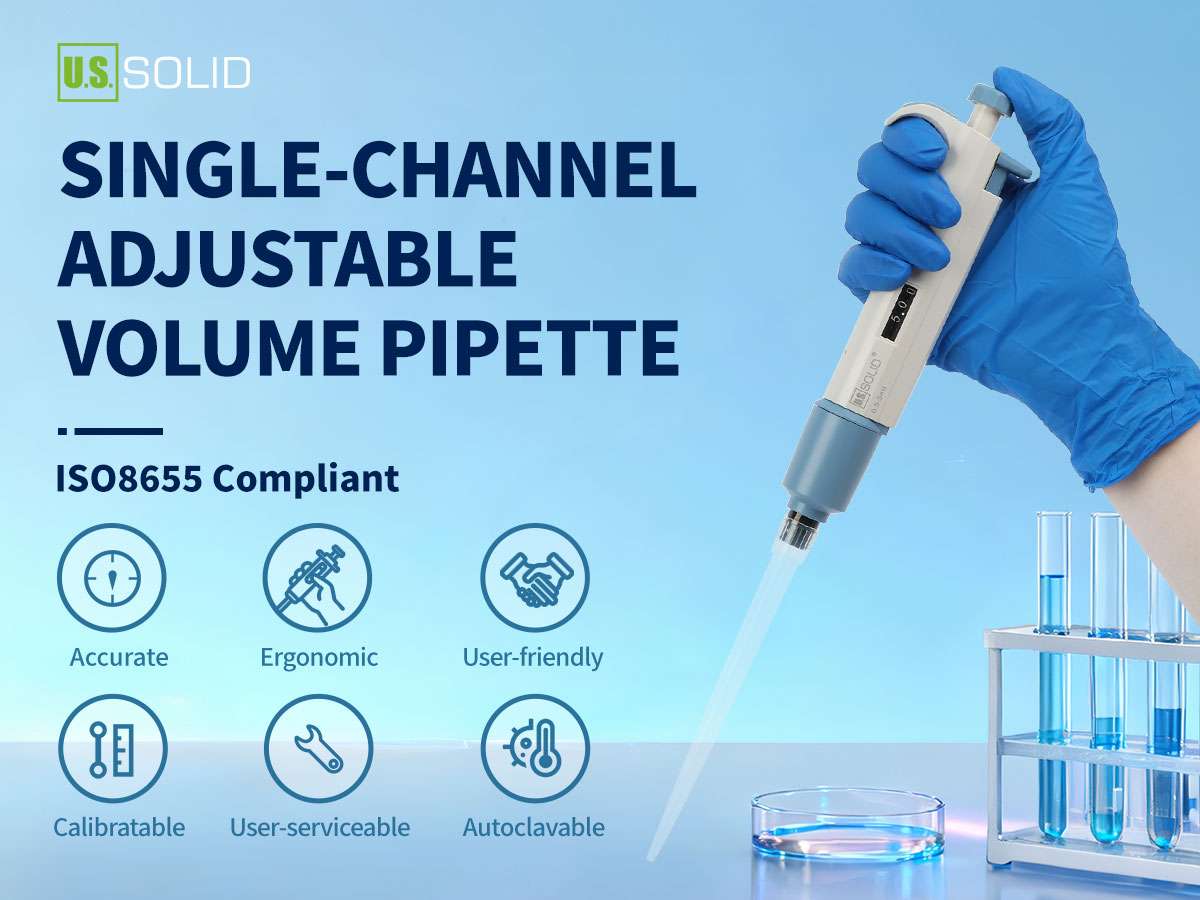
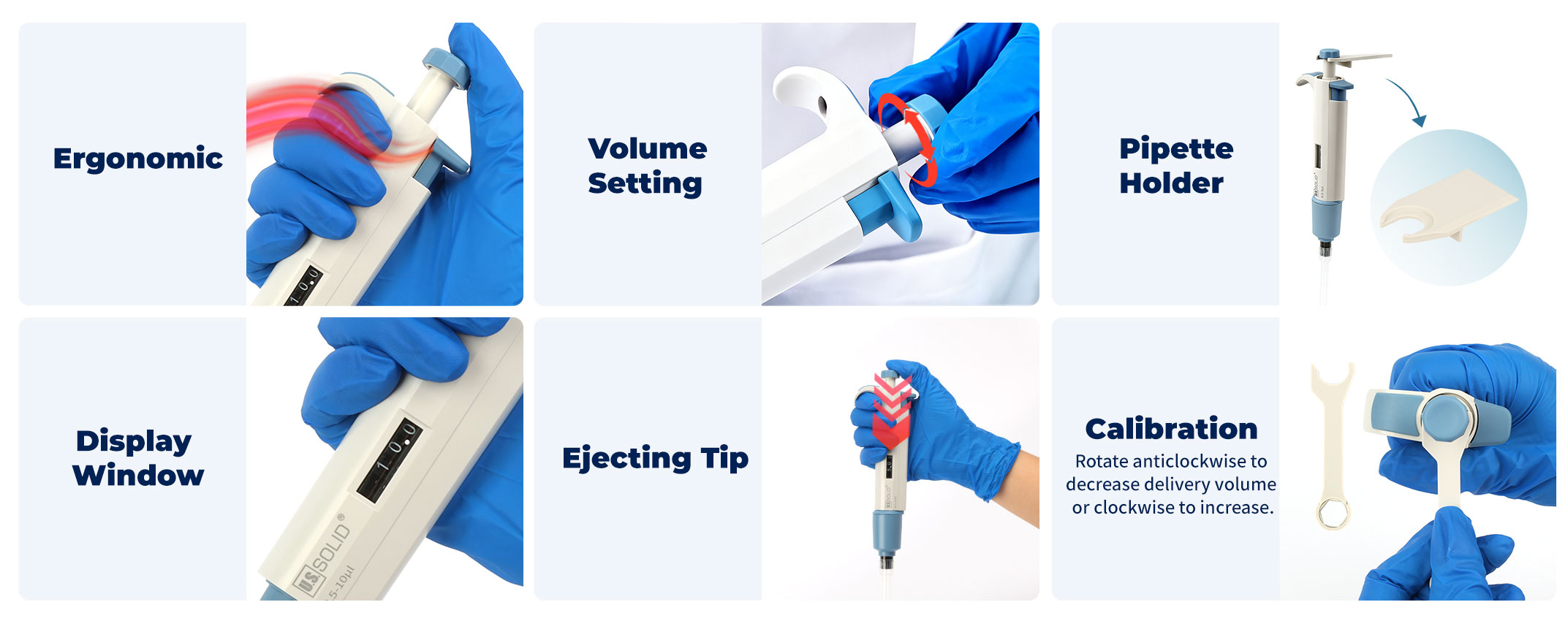
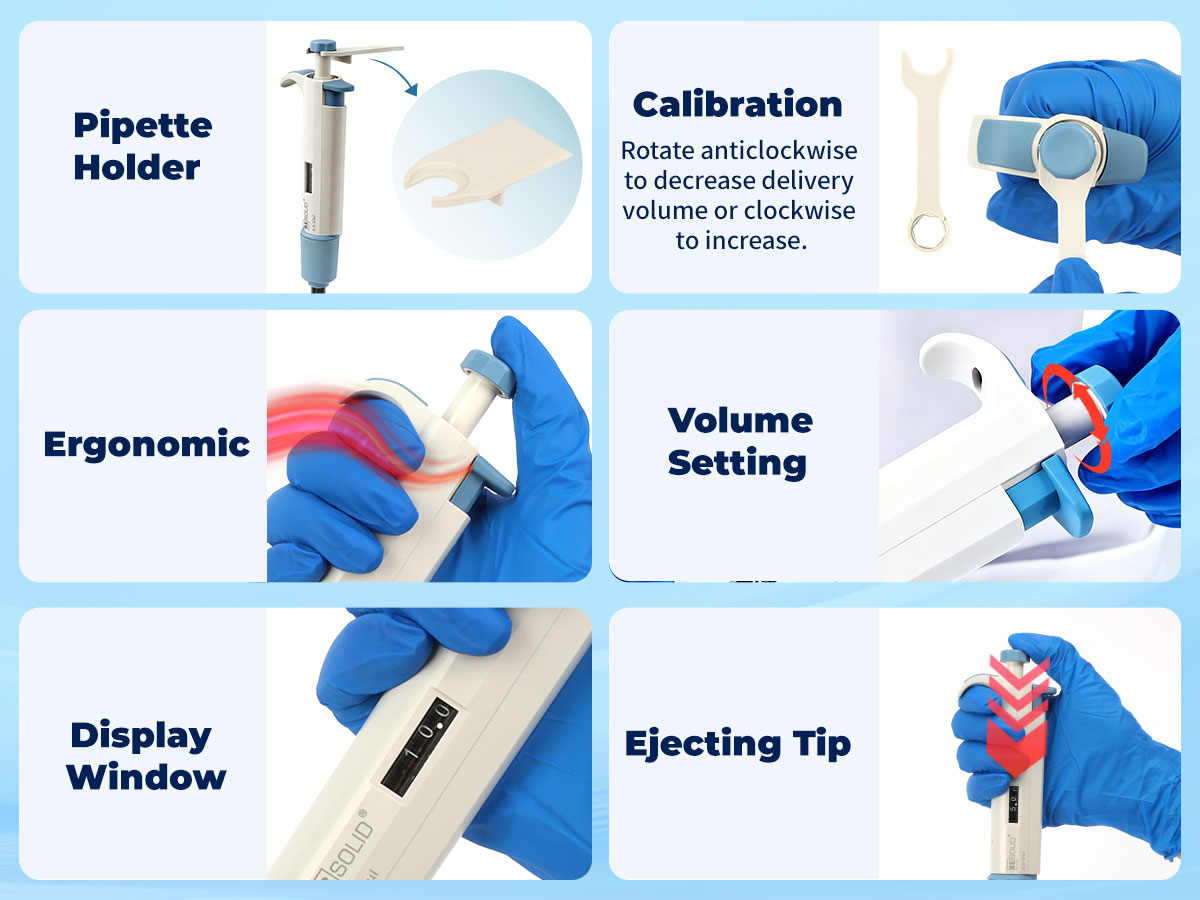
The U.S. Solid Single Channel Pipettors are expertly designed for precision and comfort in laboratory settings. Featuring an ergonomic grip that minimizes hand fatigue, these pipettors offer a large digital display for easy volume identification and precise adjustments. The series is available with options spanning 7 volume ranges, from 0.1μL to 10mL. Each unit comes with an individual calibration certificate and a calibration tool for effortless maintenance. The detachable tip cone can be autoclaved at 121°C for effective sterilization, promoting hygiene in your workspace.
Suitable for common lab procedures including sample preparation, reagent dispensing, and media transfer.
Packing List
| ① | Pipette | ② | User manual | ||
| ③ | Silicone grease | ④ | Pipette holder | ||
| ⑤ | Pipette tip | ⑥ | Plastic tool | ||
| ⑦ | Calibration Certificate | ||||
*To view the full table on mobile, please swipe left or right on the screen.
User Manual
To learn how to use this product, please refer to the user manual or watch the tutorial videos. For data on the compatibility of tips with different pipette volumes and their tolerances, refer to this table.
Maintenance
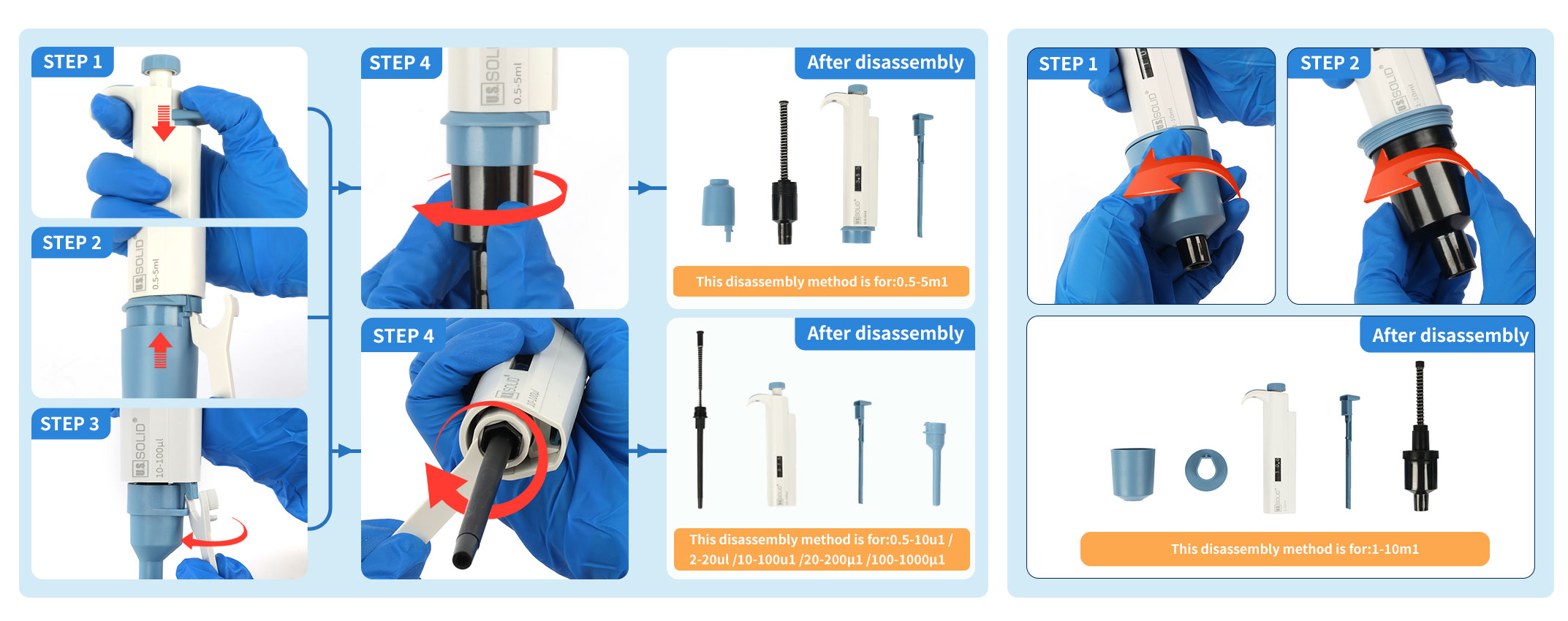
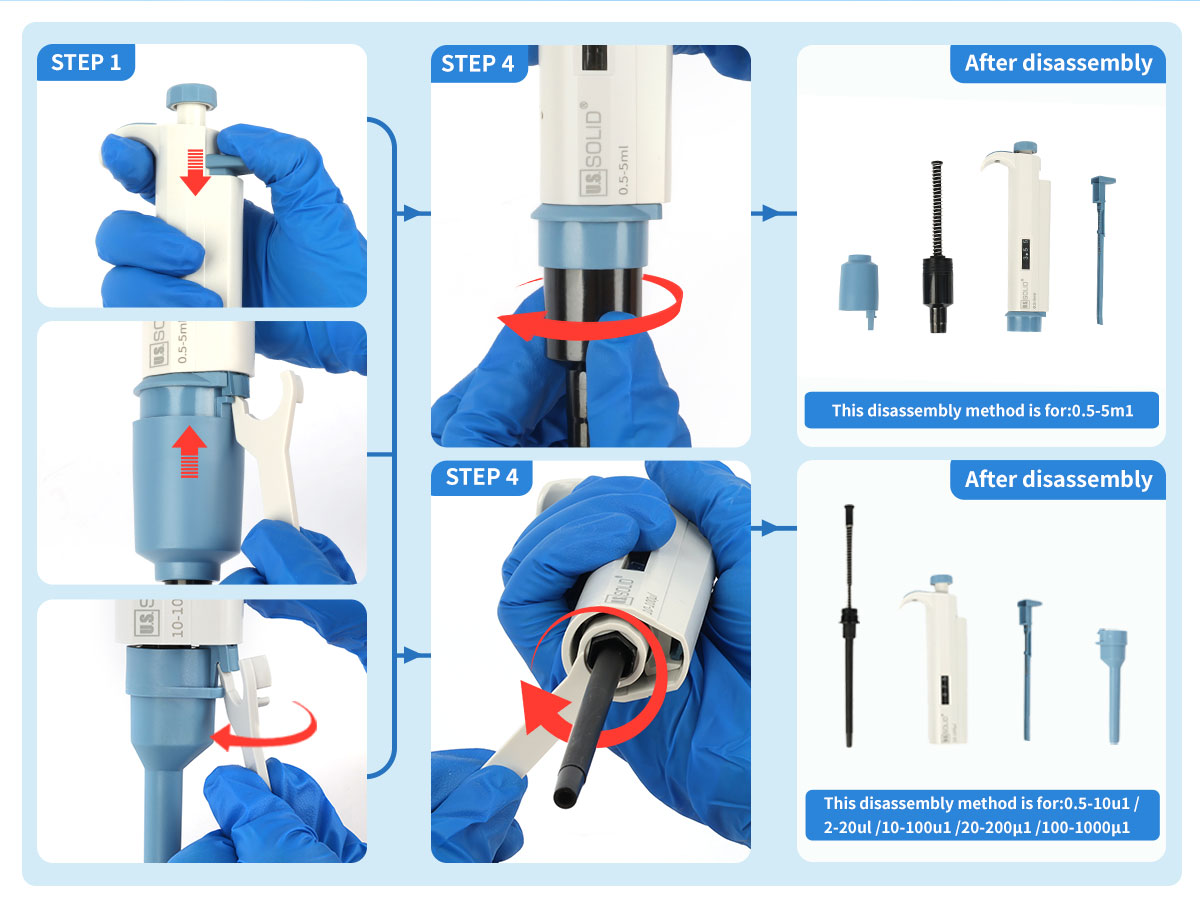
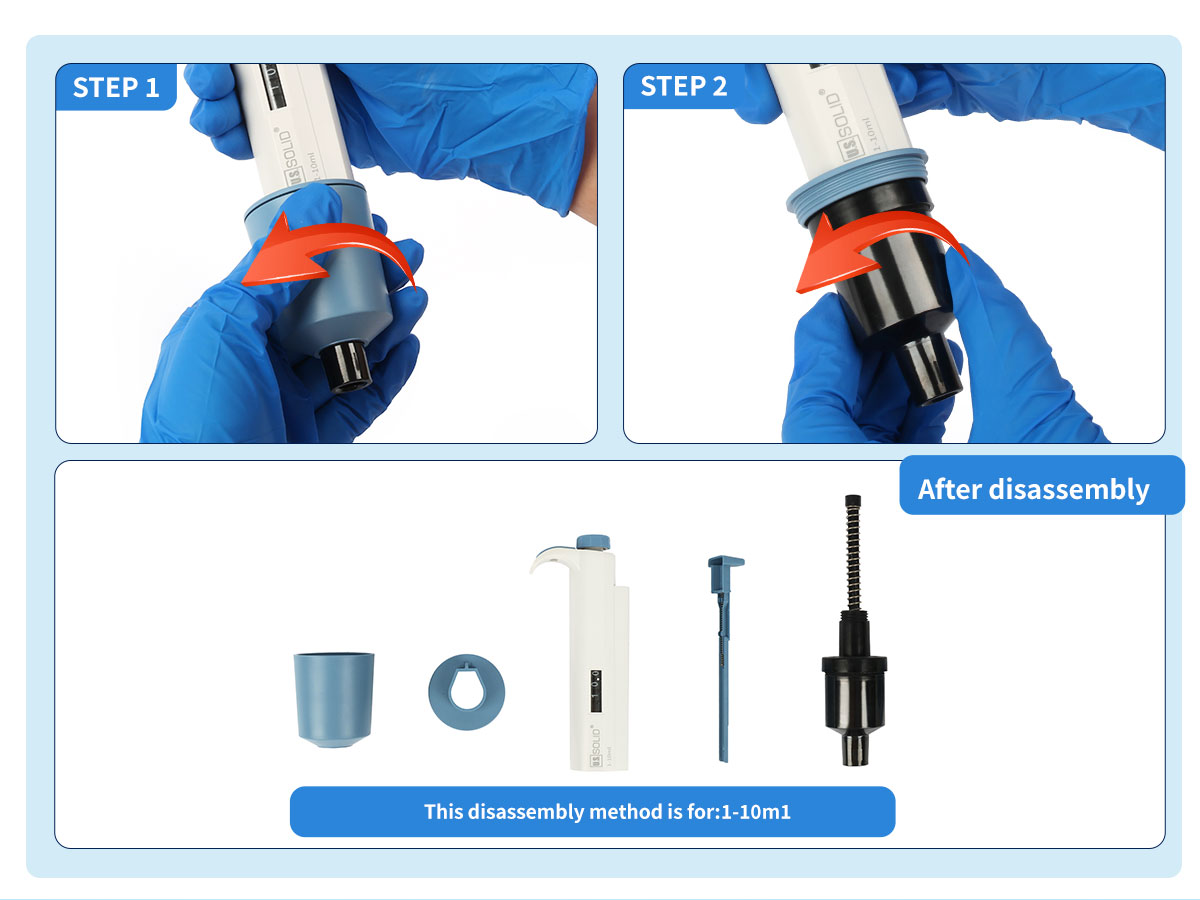
The disassembly methods vary slightly by volume specification, which are mainly grouped into three categories: the first for 0.5-10µl, 2-20µl, 10-100µl, 20-200µl, 100-1000µl; the second for 0.5-5ml; the third for 1-10ml. Please refer to the diagram below.
FAQ
1.What should be noted when placing an order?
This listing offers 7 volume specifications: 0.5-10µl, 2-20µl, 10-100µl, 20-200µl, 100-1000µl, 0.5-5ml, and 1-10ml. You need to select the specific one(s) you require—they are not provided as a complete set. Please note this.
2. What should be noted when attaching a tip to a pipette?
- Before fitting a tip, ensure the pipette tip cone is clean. Firmly press the tip onto the pipette cone to create an airtight seal. A properly sealed tip will show a visible ring between the tip and the black cone.
- Place the tip just under the surface of the liquid (2-3mm) and maintain vertical pipette position during aspiration.
3.Are tools required for the calibration and disassembly of this pipette?
Yes. A small plastic tool is included for calibration and disassembly.
4.When is recalibration needed? Is it required if the set volume differs?
No. An acceptable tolerance range applies. Refer to this table for details.
5.What if pipetting remains outside tolerance after multiple calibrations?
If operations were correct, the pipette may have inherent or acquired defects. Contact our support.
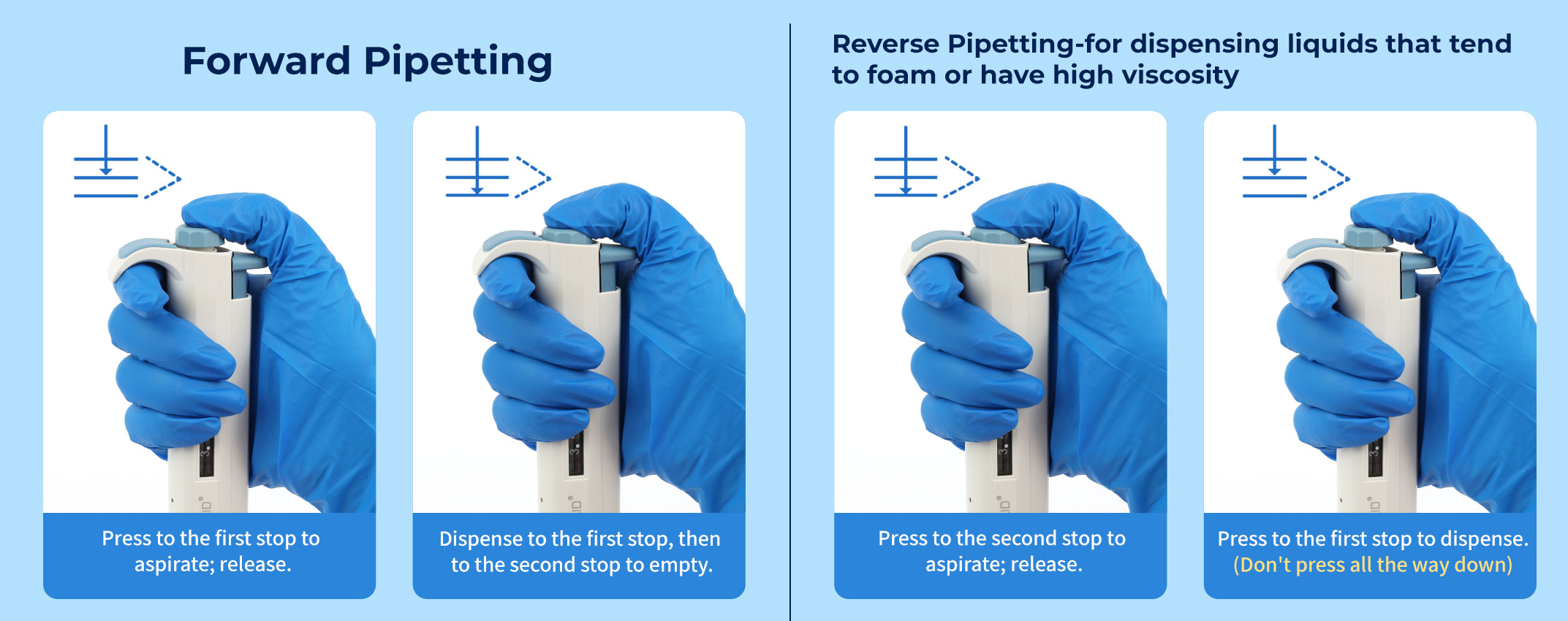
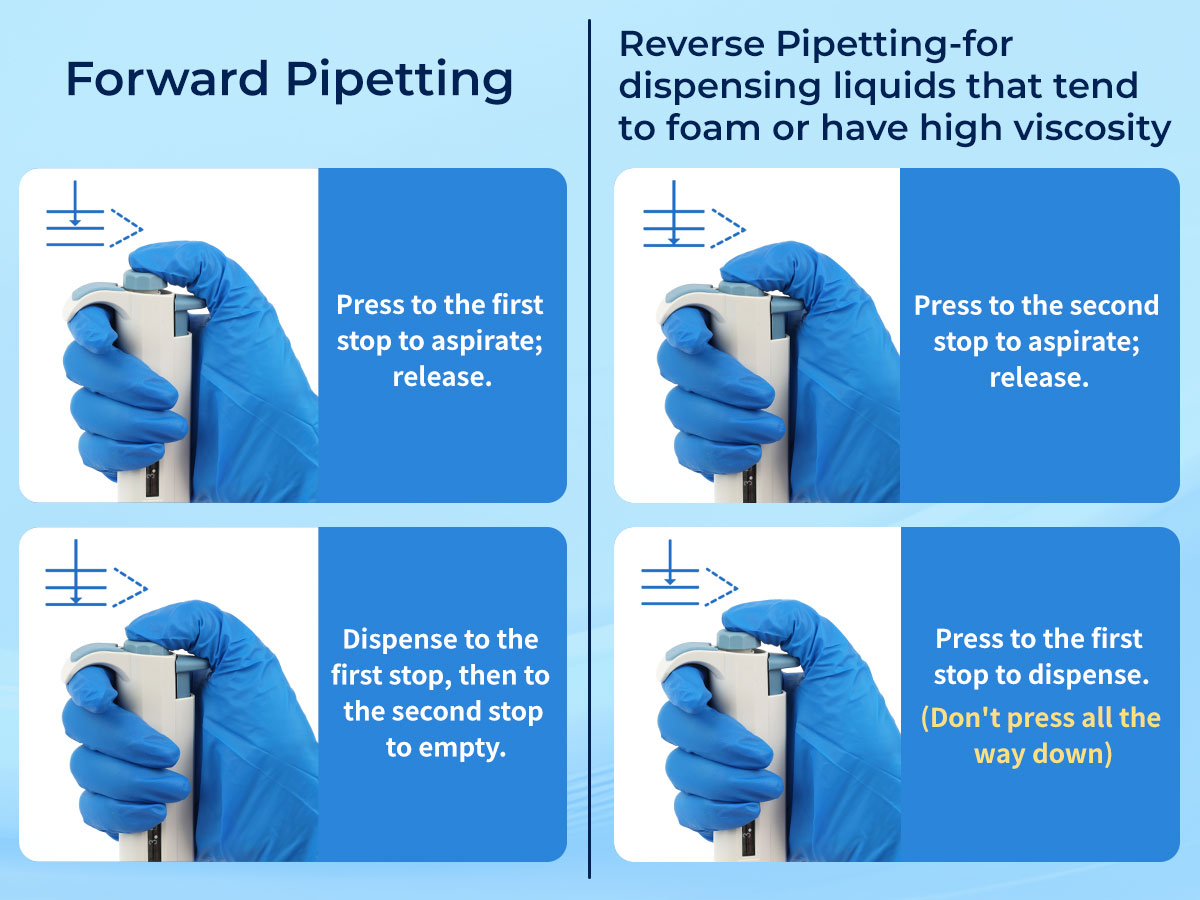
6.What's the difference between forward and reverse pipetting?
Forward pipetting is for standard liquids, while reverse pipetting (with extra volume) handles viscous/foamy solutions.